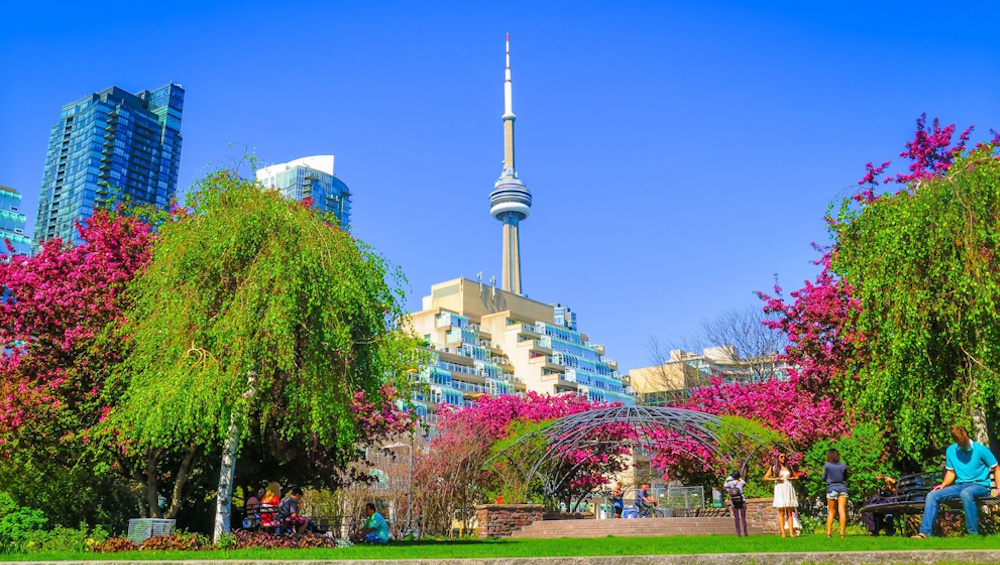
Toronto weather in summer can swing from a humidex of 45 to record-breaking flood rain in the same season, and summer 2024 proved that isn’t some freak outlier. By July 30, Toronto Pearson had already logged 215.4 mm of rain for the month, beating a record that had stood since Hurricane Hazel in 1954. That contrast tells you everything: summer here isn’t just “nice and warm.” It’s sticky, changeable, and sometimes punishing.
What catches people off guard is how often humidity does the real damage. July averages 17.6 days with a humidex of at least 30 at Pearson, nearly double June’s 8.9, which is why I’d call June the sweet spot if you want warmth without feeling wrung out. But comfort isn’t the whole story. Thunderstorms, heat warnings, muggy nights, and sudden downpours all shape how Toronto feels day to day—and what you’ll wish you packed before you stepped outside.
What Toronto summer weather feels like day to day
A July afternoon that reads 27°C on your phone can feel closer to the mid-30s once the moisture in the air settles in. That’s the part people miss when they look only at the headline temperature. On paper, Toronto’s summer numbers look fairly moderate: Environment and Climate Change Canada’s 1991–2020 normals put July average highs at 26.6°C at Toronto Pearson and about 26.8°C downtown, while average overnight lows sit around 17.8°C at Pearson and 18.0°C in the city core. Pleasant enough—until humidity turns “warm” into sticky, heavy, and harder to escape.
Humidity is what defines the day-to-day feel. According to Environment and Climate Change Canada, Toronto Pearson averages 17.6 days a year with a humidex of at least 30 in July, plus 7.4 days hitting 35 or higher. That means a 28°C afternoon often doesn’t feel like 28°C at all. It feels hotter on your skin, sweat doesn’t evaporate quickly, and even a short walk can feel draining. I’d argue this is the single biggest gap between expectation and reality for summer in Toronto.
Lake Ontario softens some edges, but not in a simple way. Near the waterfront, you’ll often get a cooler breeze that takes the edge off direct heat, especially later in the day. But the same lakeside air can feel damp and clammy, so “cooler” doesn’t always mean more comfortable. Move farther inland and temperatures are usually a touch warmer, with less immediate lake moderation.
Nights don’t always reset things, either. Downtown tends to stay a bit warmer after sunset than Pearson, and when the air is humid, evenings can feel close and sleepy rather than refreshing. So the real daily pattern isn’t just hot afternoons followed by cool nights. It’s warm mornings, muggy afternoons, and the occasional breezy break by the lake if you’re lucky.
Best months for warm, comfortable weather
June is the month people underrate, and I think it’s the best pick for most outdoor plans. You still get proper summer warmth, but the edge is softer: Toronto Pearson averages 8.9 days with a humidex of 30 or higher in June, compared with 17.6 in July and 14.9 in August, according to Environment and Climate Change Canada. That gap matters. It’s the difference between sitting on a patio comfortably and spending half the afternoon hunting for shade. Evenings also tend to cooperate more in June, which makes dinners outside, long walks, and full-day sightseeing easier.
July gets the glory for beach weather, but it’s also the month most likely to punish you for ambitious daytime plans. On climate normals, Pearson sees 4.6 days above 30°C in July, versus 3.3 in June and 2.5 in August, and nights above 20°C are most common in July too, according to Environment and Climate Change Canada. That’s why July is also the likeliest stretch for heat warnings. The City of Toronto’s threshold is strict for a reason: two or more days of 31°C or higher with nights staying at 20°C or above, or humidex values reaching 40 or more. If you want pool weather, July delivers. If you want comfort from morning to late evening, it’s often the worst tradeoff.
August usually feels like a compromise month. The heat is still very much there, but there’s a subtle turn underway: nights start easing off a bit, and the month carries a slightly higher chance of afternoon rain and storms than July on climate normals. That doesn’t ruin outdoor plans, but it does make August less dependable for all-day itineraries. For people who want warm weather without the harshest stretch of summer, late June through early July is usually the sweet spot.
Rain, thunderstorms, and heat warnings
A blue-sky Toronto morning can turn into a loud 4 p.m. downpour faster than most visitors expect. That’s the pattern that catches people: summer rain here is often convective, building through the warmest part of the day, cracking open with thunder, then moving through fairly quickly instead of settling into a grey all-day washout. So if your app shows “sunny,” don’t read that as “guaranteed dry from breakfast to dinner.” In this city, both can be true on the same day.
The numbers back that up. At Toronto Pearson, days with at least 10 mm of precipitation average 3.2 in June, 2.8 in July, and 3.6 in August, according to Environment and Climate Change Canada. That doesn’t mean constant rain; it means a handful of summer days can produce enough water to disrupt plans in a hurry. And when those storms hit, they don’t land evenly. Downtown can stay oddly calm while Mississauga gets the first burst, or Markham gets a stronger late-day cell after the core has already dried out. I think that local inconsistency is one of the most underrated parts of summer weather around Toronto—you can’t assume the conditions at Union Station match what’s happening 25 minutes away.
Heat adds another layer. Environment and Climate Change Canada issues a Heat Warning here when forecasts call for two or more days of 31°C or higher with nights of 20°C or higher, or two or more days with humidex values of 40+. In summer 2024, Toronto logged 12 heat-warning days, and the first major stretch came with forecast humidex values of 40 to 45 and overnight temperatures of 20 to 23°C, according to City of Toronto releases. That’s not just hot afternoons; it’s the kind of sticky, sleepless heat that lingers after dark.
Then there’s the extreme end, which Toronto does hit. July 2024 became the wettest month ever recorded at Toronto Pearson, reaching 215.4 mm by July 30, breaking a record that had stood since 1954, according to The Weather Network citing Environment Canada data. Most summer days aren’t like that, but that’s the point: conditions can flip fast, and a pleasant morning forecast doesn’t buy you a stable afternoon.
What to pack and plan for Toronto in summer
A tote full of “just in case” clothes is the wrong move here; the smarter approach is a small set of pieces that can handle a cool lakeside morning, a sticky afternoon, and a sudden downpour without weighing you down. That means light layers, not bulky backups. A T-shirt or tank, one thin overshirt or cardigan, and shorts or loose pants will cover most days better than a heavy hoodie you’ll regret carrying by noon. If you’ll be near Lake Ontario early or late, pack that extra layer even when the forecast looks warm.
Shoes matter more than people expect. Toronto is a walking city in summer, and if you’re covering downtown blocks or taking a ferry to the Islands, breathable sneakers or supportive sandals are a better call than anything stiff, heavy, or waterproof-to-a-fault. Waterproof sounds smart until your feet are trapped in humid heat for hours. I’d rather have quick-drying shoes and a spare pair of socks than clunky rain gear.
Storm prep should be compact. A small umbrella or a very light rain jacket earns its space because summer showers can hit hard and pass fast, and you don’t need a full wet-weather setup to deal with that. What you do need is something you’ll actually carry every day instead of leaving in your room.
Heat basics are non-negotiable, especially in July. Bring sunscreen you’ll reapply, a refillable water bottle, sunglasses, and clothes in breathable fabrics like cotton or linen blends. Dark, tight clothing looks fine for 20 minutes and feels terrible three subway stops later. Toronto in summer rewards people who pack for range, not excess.
Conclusion
Toronto weather in summer rewards the prepared and punishes the overconfident. The pattern is clear: June usually gives you the easiest balance of warmth and comfort, July brings the city’s most intense heat and humidity, and August keeps the warmth but adds a real chance of soaking rain. That doesn’t mean summer plans fall apart. It means you should build around the swings, not pretend they won’t happen.
If you’re choosing dates, June is the smart pick for most people. If you’re visiting later, pack for two versions of Toronto at once: hot sun and sudden storms. That’s the real lesson here. Summer in Toronto isn’t hard to enjoy, but the people who enjoy it most are the ones who respect how fast 28°C can turn into a humidex of 40 and a flooded street by evening.
Frequently Asked Questions
How hot does Toronto usually get in the summer?
Toronto summer temperatures usually sit in the mid-20s Celsius, but heat waves can push things well above that. The real surprise isn’t the daytime high, though—it’s how quickly the city can feel much hotter when the sun, pavement, and humidity all stack up. If you hate sticky heat, that combination matters more than the number on the thermometer.
Is Toronto summer humidity actually bad?
Yes, and that’s what catches a lot of visitors off guard. A 28°C day can feel far worse when the air is humid, because sweat doesn’t evaporate the way you want it to. You’ll notice the difference fast, especially in the afternoon and near the lake.
Does it rain a lot in Toronto during the summer?
Toronto gets plenty of summer rain, and it usually shows up as short, heavy bursts instead of all-day washouts. That’s annoying if you’re planning around it, but it also means the weather can flip fast. A sunny morning doesn’t guarantee a dry afternoon.
Are thunderstorms common in Toronto in summer?
They are, especially when hot, humid air builds up and then breaks. Some storms pass through quickly with loud thunder and a sharp downpour, while others bring stronger wind and sudden disruption. Don’t treat a clear sky as a promise—it can change in an hour.
What should I pack for Toronto in summer?
Pack for heat, humidity, and sudden rain. Light clothes, comfortable shoes, sunscreen, and a small umbrella are the basics, but a layer helps too because evenings can feel cooler than you expect. If you’re staying outside all day, that mix will save you a headache.