More than $300 million has been poured into the Rogers Centre by 2025, but the smartest angle on the best things to do in Toronto in 2026 isn’t chasing the biggest names harder — it’s knowing how to experience them with less friction and a lot more payoff. That’s the part most travel lists miss. Toronto’s obvious draws are still obvious for a reason, but they feel completely different when you use the stadium’s new social spaces instead of treating it like a seat-and-leave attraction, or when you time the Islands before the crowds that can push busy summer days to 20,000 visitors. The city rewards people who plan just a little better. This list picks seven moves that make Toronto feel sharper, less touristy, and far more worth your time, from downtown icons done right to neighbourhoods and museum stops that actually earn a place in your day.
See the CN Tower and Rogers Centre without the tourist trap feel
The fastest way to blow your budget downtown is stacking a CN Tower ticket, a premium sunset slot, and a Rogers Centre add-on in the same afternoon. Don’t do that. The smart move is to pick one paid highlight at the tower, not all three. If you want the bragging-rights version, EdgeWalk is the splurge. If you want the view with a built-in experience, 360 Restaurant makes more sense for a lot of people because you’re getting the lookout and a meal context instead of paying for thrill alone. And if you just want the classic photo-op, the Glass Floor is the simplest box to tick without turning the visit into a full-on expense spiral.
Sunset looks better, obviously, but it’s also when timed admission gets more expensive and more crowded. Daytime is cleaner for photos and easier if you care about actually seeing the lake, the islands, and the street grid below. Sunset gives you that dramatic light shift and city glow, but you’ll pay for the privilege. My take: go by day if you’re trying to keep this stop efficient; go near sunset only if the tower is the main event, not one item on a packed schedule.
Next door, Rogers Centre feels different now because it is different. The Blue Jays’ renovation topped $300 million and wrapped across 2024 and 2025, according to MLB and the team, and the result is a stadium built less around staying glued to one seat and more around moving through it. The 2026 Blue Jays home schedule matters here because a game ticket now unlocks the Outfield District’s five distinct outfield neighbourhoods and extra social spaces, according to the 2026 Toronto Blue Jays Information Guide. That changes the math. You don’t need perfect seats to have a good time, but you do need to pick a home date that fits your trip.
What people miss is that these two landmarks work best as a choice, not a package deal. Do the tower and skip the premium stadium spend, or catch a Jays game and skip the tower’s priciest upgrade. That’s how you see the obvious icons without getting hit with the obvious tourist bill.
Spend a full day in the Distillery District and St. Lawrence Market
The smartest version of this day starts with a sandwich, not a selfie. St. Lawrence Market pulls in about 1.7 million visitors a year, according to St. Lawrence Market’s 2025 figures, and that tells you exactly what it is: not some precious food hall, but a working downtown institution that still earns repeat visits. Go there hungry and early. The classic move is a pea meal bacon sandwich from one of the long-running vendors, then a look around for fresh peameal bacon and the kind of staples locals actually buy. That’s why this stop matters. It feels useful.
But useful isn’t the same as relaxing. By late morning on a weekend, the market can turn from efficient to shoulder-to-shoulder fast, especially if you’re trying to browse instead of just eat and move. I’d do the practical part first: breakfast, a bit of shopping, maybe one more snack, then get out before the lines start dictating your mood.
The walk to the Distillery District is what makes this pairing work. It’s close enough to do on foot without thinking too hard about transit, and the change in pace is the whole point. You go from crowded counters and errands energy to pedestrian-only cobblestone streets where wandering finally feels like the activity itself.
That’s also where the day gets better. The Distillery District has the polish St. Lawrence doesn’t try to have: brick industrial buildings, small art galleries, public art, and seasonal markets that can make even a short visit feel eventful. Yes, it can be busy too, and on weekends that charm gets thinner if you arrive in the middle of the afternoon crush. Still, this is the place to slow down, grab a coffee, sit for a bit, and actually enjoy being there instead of optimizing every minute.
If you only treat these two areas as food stops, you’re missing the best part. One feeds you well; the other gives you room to breathe.
Catch a game or concert at the Harbourfront and Scotiabank Arena
180 ticketed events a year in one building is exactly why this part of downtown rewards planning and punishes spontaneity. Scotiabank Arena isn’t just where the Maple Leafs and Raptors play; it’s also one of the city’s biggest magnets for major touring acts, drawing about 2.75 million attendees annually, according to Scotiabank Arena’s 2026 figures. That scale matters because the area can feel electric when you’ve got a seat for something big, but weirdly flat if you just show up hoping the energy will sort itself out for you.
What works better is building your evening around the calendar. A weeknight game gives you a different crowd than a sold-out arena concert, and either one pairs well with time by the water before doors open. Harbourfront Centre is the move here: public events, seasonal programming, and an easy lakefront walk that makes the whole outing feel less like a line-management exercise. You’re also right by the ferry docks for the Toronto Islands, which makes this stretch of the waterfront more useful than people give it credit for.
Union Station is the blessing and the headache. You can reach the arena fast by GO Transit, TTC, or on foot through the PATH, and that indoor route is a lifesaver when the weather turns bad. But once tens of thousands of people hit the same corridors at once, the PATH gets confusing, Union clogs up, and rideshare pickup becomes a patience test. My advice: arrive early, pick your exit route before the event ends, and don’t assume a quick post-show Uber is realistic. This is one of Toronto’s best live-event zones, no question. It’s also the part of downtown most likely to waste your time if you wing it.
Use the Toronto Islands as your easiest escape from the city
A $9.57 round-trip ferry buys one of the cheapest perspective shifts in Toronto, and that’s exactly why the islands are such a smart 2026 pick. You leave from the Jack Layton Ferry Terminal, and in under half an hour the city stops feeling loud, packed, and expensive. That said, the biggest mistake is treating it like a casual midday errand. Toronto Island Park gets about 1.5 million visits a year, and busy summer days can hit 20,000 people, according to the City of Toronto, so if you roll up late, the ferry line can absolutely eat your morning.
Centre Island gets the most traffic for a reason: it’s the easiest all-round stop if you want beach time, open paths, snack stands, and a straightforward first visit. But I wouldn’t stay there all day unless convenience is your whole goal. Ward’s Island is quieter, more residential, and better for the version of the trip where you actually want to exhale a little. Hanlan’s Point feels looser and less polished, which is part of the appeal. Each stop gives you a different mood, and that’s what makes the trip better than a basic waterfront walk.
The skyline views do a lot of the heavy lifting here. Toronto looks best from a slight distance, and the islands give you that clean, wide-angle shot without making you pay observation-deck prices. Rent a bike if you want to cover more ground without turning the day into a workout; it’s the easiest way to bounce between beaches, quieter paths, and photo spots.
One catch matters in 2026: ferry service is seasonal in feel even when routes are running, so schedules and frequency can shift with the time of year, day of week, and weather. Check the departure board before you go, not while you’re already in line. Do that, get there early, and the islands feel like a day trip that somehow fits inside a normal afternoon.
Go beyond downtown in Kensington Market, Chinatown, and Queen West
Kensington Market is the neighborhood everyone tells you to hit, but it’s also the one most likely to disappoint if you show up expecting a polished “must-see.” What it does better than almost anywhere else in Toronto is messiness with character: vintage racks spilling onto the sidewalk, graffiti that changes block by block, tiny grocers next to old-school bakeries, and the kind of weekend foot traffic that makes the whole place feel half street party, half treasure hunt. If you like browsing without a plan, it’s great. If you hate crowds and slow walkers, go on a weekday instead, because the hype is real and so is the congestion.
A few blocks over, Spadina’s Chinatown usually gives you the better meal. This stretch is less about cute storefronts and more about payoff: dumplings that arrive fast and cheap, hanging roast duck and pork in the window, bakeries, bubble tea, noodle spots, and late-night options that keep working after trendier parts of the city have started winding down. That’s the part visitors miss. Kensington gets the photos, but Chinatown often gives you the actual satisfying afternoon and evening, especially if you want to eat more than once without turning it into a research project.
Queen West changes the pace again. West of University, then pushing farther toward Ossington, it becomes Toronto at its most browseable: indie clothing shops, design stores, small galleries, record bins, tattoo studios, bars filling up before dinner is even over. I like it best at that in-between hour when retail is still open and nightlife is already starting to leak onto the sidewalks. It’s more put-together than Kensington, less food-driven than Chinatown, and better for people-watching than either. Don’t treat these areas as interchangeable—they’re not. Kensington is for wandering, Chinatown is for eating, and Queen West is where you go when you want the day to slide naturally into the night.
Book a museum stop that feels worth your time: ROM, AGO, or Aga Khan
Trying to hit the ROM, AGO, and Aga Khan in one day is the fastest way to turn a good museum stop into a blur of sore feet and half-remembered labels. Pick one. You’ll enjoy it more, and you’ll actually leave with a clear memory of what you saw.
The ROM is the obvious heavyweight if you want scale and the broadest range of natural history plus whatever major special exhibition is drawing the biggest crowds. That’s the upside. The downside is the same thing: it can feel like the default choice everyone makes, which means more noise, more people, and more pressure to “do it all.” If you like big, ambitious museums, go for it. I just wouldn’t choose it on a day when you already feel overscheduled.
The AGO is usually the smarter pick if you want a major museum without that overstuffed feeling. Its mix of Canadian and international art gives you plenty to work with, but the building itself matters too; Frank Gehry’s redesign gives the place a shape and flow that feels intentional instead of exhausting. It also has real pull, not just local goodwill: according to the Art Gallery of Ontario, attendance reached 672,244 in 2024 and 871,152 in its 2024–2025 impact reporting. That tells you something simple—people don’t treat it like backup plans.
Then there’s the Aga Khan Museum, which is the best choice if what you want is calm. The art, architecture, and surrounding gardens make it feel more focused and more spacious than the city’s bigger-name options, but that quieter mood is exactly why it works. What’s often missed is that a museum stop doesn’t need to be the loudest or largest part of your day to be the best hour you spend in Toronto.
My take: choose the ROM for maximum range, the AGO for the strongest all-around art visit, and the Aga Khan when you want beauty without friction.
Plan one fall or winter move that makes Toronto feel newer
Toronto gets more interesting the minute the weather starts being annoying. Summer gives you the easy postcard version, but late fall and winter strip some of that polish away, and that’s exactly why the city can feel newer then.
The Toronto Christmas Market is the obvious late-November or December pick, and yes, it’s popular for a reason. Go for the lights, the stalls, the music, the whole festive overload. But don’t treat it like an all-night mission if you hate crowds, because the mood shifts fast once it gets packed. A weekday evening or earlier time slot is the smarter move. You’ll still get the atmosphere without spending half your night inching through people holding overpriced hot drinks.
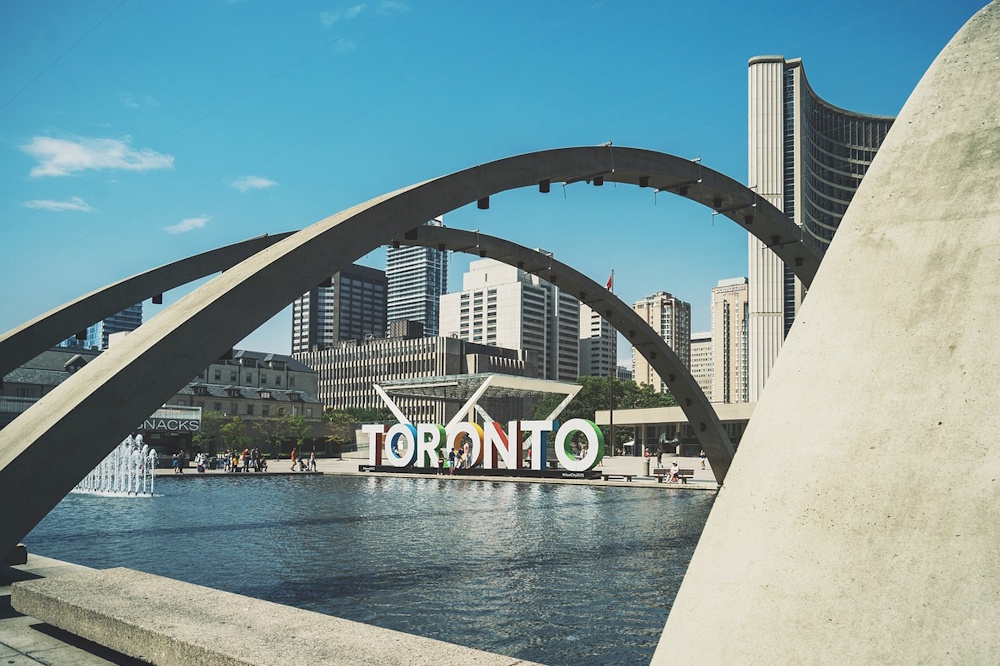
Nathan Phillips Square is the better reset. Cavalcade of Lights gives downtown a little drama, and the skating setup there is one of the few touristy things in Toronto that still feels genuinely public rather than overly managed. That matters. You’ve got office workers, families, awkward first dates, people who clearly haven’t skated in years, all sharing the same rink. It’s messy in a good way.
Cold snaps can wreck even a solid plan, though. When walking outside turns from crisp to miserable, swap the romantic winter-city idea for something practical: stack an indoor stop with a shorter seasonal outing instead of forcing a full day outdoors. The Distillery’s Winter Village works if you want the festive version of that experience, but I’d still keep a backup like the AGO, ROM, or a few hours inside the Eaton Centre in your pocket. Toronto in winter rewards flexibility more than ambition.
That’s the tradeoff you need to accept. The city is less convenient once the wind starts slapping you around, but it also feels less staged. If you can handle wet boots, early darkness, and one plan change, you’ll get a version of Toronto that feels lived-in instead of performed.
Conclusion
The best things to do in Toronto in 2026 come down to one simple truth: the city is better when you use it, not just look at it. That means treating Rogers Centre as a roaming social space, not a checkbox, using the Islands as a low-cost reset at $9.57 round trip, and choosing neighbourhoods or museums that match your energy instead of forcing yourself through generic must-sees. Toronto can feel crowded, expensive, and overhyped if you do it lazily. Done well, it feels smart, layered, and surprisingly easy. If you’re planning a trip, don’t ask what’s famous. Ask what will feel good once you’re actually there — that’s the difference between a packed itinerary and a day you’ll remember.
Frequently Asked Questions
What are the best things to do in Toronto in 2026 if it’s my first time visiting?
Start with the classics: the CN Tower, St. Lawrence Market, the waterfront, and a walk through Kensington Market or the Distillery District. That mix gives you the city’s skyline, food, history, and neighborhood energy without wasting a day on filler. If you only have one weekend, this is the smartest way to see Toronto fast.
How many days do you need to see Toronto properly?
Three days is the sweet spot. You’ll get one day for downtown sights, one for neighborhoods and food, and one for a museum, day trip, or a slower waterfront stroll. Two days works if you move quickly, but you’ll feel rushed.
What should I do in Toronto if I want something beyond the usual tourist spots?
Go straight to the neighborhoods. Queen West, Leslieville, and the Junction all have better food, local shops, and a more real feel than the standard postcard stops. That’s the tradeoff in Toronto: the famous attractions are fine, but the city gets better when you leave the obvious route.
Is Toronto expensive for sightseeing in 2026?
It can be, but not everything costs a lot. A strong day in Toronto can include free or low-cost walks, markets, parks, and waterfront views, while big-ticket stops like towers, museums, and guided tours push the price up fast. If you pick carefully, you can have a full trip without burning through your budget.
What’s the best time of year to visit Toronto for activities?
Late spring through early fall is the best window because the city feels active and outdoor spots actually make sense. Summer brings the most events and the best lakefront weather, but it also brings crowds and higher prices. Fall is the smarter pick if you want milder weather without the chaos.