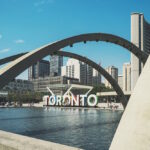
Toronto culture and diversity isn’t a slogan city hall trots out—it’s a hard demographic fact. In the Toronto metro area, 46.6% of residents were immigrants in 2021, and the city says people here trace more than 200 ethnic origins and speak over 140 languages. That changes everything. It changes what you hear on the TTC, what shows up on restaurant strips in Scarborough and North York, and what kind of city Toronto becomes after dark when festivals, music, and street life take over. What’s often missed, though, is that Toronto’s mix isn’t just broad; it’s intensely local. Mandarin, Cantonese, Tagalog, Spanish, and Tamil aren’t abstract census categories—they shape real blocks, businesses, and routines. But the story isn’t tidy. A city this diverse produces creative energy at huge scale, yet it also faces sharp social strain. That tension is exactly what makes Toronto distinct, and worth looking at closely.
Why Toronto’s population mix stands out
Nearly half of the Greater Toronto Area was born outside Canada in 2021: 2,862,850 people, or 46.6% of the metro population, according to Statistics Canada. That number changes how you read the city. Immigration in Toronto isn’t a side story or a recent branding exercise; it is the basic demographic fact that shapes schools, workplaces, transit rides, grocery stores, and the sound of the street.
Inside the city proper, the mix is even more concentrated. Toronto’s own newcomer strategy says 51.2% of residents are foreign-born, while the 2021 Census found 55.7% of residents identified as part of a visible minority population, a total of 1,537,285 people. Add in the city’s count of more than 200 ethnic origins and more than 140 languages, and you get what makes Toronto feel different from most large North American cities: diversity here is not scattered. It’s dense, everyday, and impossible to miss.
Language data makes that visible in a way broad slogans never do. Statistics Canada reports that English remains the dominant language spoken at home, but the largest non-official languages are Mandarin at 97,890 people, Cantonese at 85,870, Tagalog at 75,860, Spanish at 59,195, and Tamil at 53,700 in 2021. Punjabi also ranks among the city’s major home languages in census data. That matters because language isn’t abstract identity. It tells you where local media survives, which businesses thrive, what school communities look like, and why Toronto can feel like several cities layered into one.
Compared with Montreal, Toronto stands apart for sheer immigrant concentration. In 2021, immigrants made up 33.4% of the Montreal census metropolitan area, well below Toronto’s 46.6%, according to Statistics Canada. Vancouver is also highly diverse, but Toronto’s scale gives it a different weight: this isn’t just a mixed city, it’s a massive mixed city. That’s the distinction that really matters.
But the success story has a bill attached to it. A city that attracts newcomers at this scale puts huge pressure on housing, transit, classrooms, and settlement services. I think that tension is central to understanding Toronto honestly: its openness is real, and so is the strain. The population mix is a strength, but it also tests whether the city can keep up with the people who keep choosing it.
Neighbourhoods where Toronto culture feels real
Toronto feels most like itself in the blocks where one alphabet gives way to another within a 10-minute walk. That shift is the real marker of the city’s cultural life: not a slogan, but a streetscape where Chinese bakeries sit beside bubble-tea chains in Chinatown, souvlaki spots and pastry shops spill onto Danforth sidewalks in Greektown, and sari stores, sweet shops, and casual dosa counters still signal Little India’s South Asian roots.
Kensington Market says even more because it refuses to stay neat. You can buy Jamaican patties, vintage clothes, Mexican groceries, and espresso within a few doors, which is exactly why the area matters. It doesn’t present culture as a tidy district with one identity; it shows how Toronto actually works when communities overlap, trade, and remake a place over decades.
Some neighbourhoods turn that street-level mix into major public rituals. Taste of the Danforth still gives Greektown a citywide stage every summer, and that matters because festivals don’t just entertain — they confirm which communities have shaped Toronto’s public memory. Little Italy’s café culture and Euro Cup crowds do something similar on quieter terms, while Chinatown’s food courts, produce shops, and holiday celebrations keep a commercial corridor tied to everyday immigrant life rather than pure nostalgia.
But here’s the catch: the city markets these districts as proof of its openness while rising rents chip away at the small businesses that built that reputation. That tension is impossible to ignore. Kensington has fought development pressure for years, parts of Chinatown have seen major condo and retail change, and even well-known strips can start feeling like branded versions of themselves once independent shops get replaced by higher-margin tenants. My view is simple: a neighbourhood isn’t culturally rich just because it has a famous sign or festival weekend. It stays meaningful when the grocer, bookstore, bakery, and community-run storefront can still afford to be there.
Even events that celebrate Toronto’s mix reveal how geography keeps shifting. Caribana, now officially the Toronto Caribbean Carnival, is strongly tied to Caribbean communities across the city rather than one single enclave, which shows both growth and dispersal. The culture is still there. The question is whether the streets that made it visible can remain livable for the people who created it.
Arts, festivals, and media that shape the city’s voice
Nuit Blanche pulls in more than 1 million attendees a year, and that scale tells you something basic about Toronto: culture here isn’t side entertainment, it’s one of the main ways the city speaks in public. TIFF does that in a different register, turning September into a global film marketplace while still giving local filmmakers a home crowd. Harbourfront Centre matters for the opposite reason. It keeps the waterfront from becoming just expensive scenery by programming literary talks, dance, music, and multidisciplinary work that reflects the city back to itself.
Just as important, the strongest cultural expression often comes from diasporic artists who aren’t making “community art” for a niche audience. They’re shaping the mainstream. Toronto has produced globally known musicians such as Drake and The Weeknd, both of whom carry the city’s mix of Caribbean, Black, Middle Eastern, and immigrant influences into worldwide pop. In film and literature, creators like Deepa Mehta and Michael Ondaatje helped define how migration, memory, and belonging get told from a Toronto vantage point. That matters because the city’s identity isn’t locked inside local borders; artists here constantly move between neighbourhood realities and international audiences.
Festivals make that exchange visible. Luminato has built its reputation on large-scale cross-disciplinary work, while the Toronto Caribbean Carnival remains one of the clearest examples of diasporic culture taking over public space with authority, not asking politely for room. According to the City of Toronto’s Festival Strategy, 115 City-funded festivals generated a combined 19.44 million visits in 2024. That isn’t a side scene. It’s mass participation.
But the flattering story has a weak point: inclusion on the poster doesn’t always mean inclusion in the system. Funding, venue access, media attention, and institutional prestige still cluster around a relatively small set of gatekeepers, which means plenty of artists from immigrant and racialized communities build audiences first and get institutional recognition later, if they get it at all. I think that tension is the real signature of Toronto’s arts life—open, ambitious, visibly plural, and still uneven in who gets sustained support.
Where diversity meets friction
A city can market itself as welcoming and still produce a 19% jump in reported hate crimes in a single year. Toronto Police recorded 443 hate crime incidents in 2024, up from 372 in 2023, and the sharp rise in cases targeting South Asian communities — from 14 to 41 — cuts through the easy story that demographic mix automatically creates harmony. That’s the tension people outside the city often miss: being diverse doesn’t mean being equal, and it definitely doesn’t mean being safe from bias.
The harder truth shows up in money just as clearly as it does in policing. City of Toronto social-development reporting and Statistics Canada data have repeatedly found that racialized residents face higher unemployment and lower incomes than white Torontonians, even when education levels are strong. That gap matters because it compounds everything else. If you’re paying more of your income toward rent, waiting longer for stable work, and commuting farther from the core, the city’s celebrated openness can feel pretty abstract.
Housing is where the branding really breaks down. According to the City of Toronto’s housing indicators and local research from the Wellesley Institute, many newcomer and racialized households are far more likely to live in unaffordable or overcrowded housing, not because they prefer it, but because the market leaves them few real options. Toronto’s diversity is visible on every block, but access to secure housing is not distributed on anything close to equal terms. I’d go further: this is one of the clearest places where the city fails its own self-image.
Daily life gets tougher in less visible ways too. Language access affects everything from booking healthcare to understanding tenant rights or school notices, and when translation is patchy, small problems turn into expensive ones fast. Newcomer support programs help, but they’re uneven and often stretched. Schools carry part of that load through settlement workers and English-language support, yet integration isn’t automatic; some families navigate complex systems with less information, less time, and less confidence than others. Toronto’s multicultural identity is real. So is the friction built into how the city works.
What Toronto’s mix means for visitors and new residents
The quickest way to miss Toronto is to hunt for a packaged “multicultural experience” instead of paying attention on an ordinary Tuesday. The city makes the strongest impression in small, daily moments: hearing three languages on one streetcar ride, buying patties from a family-run bakery, then walking ten minutes and finding a different set of groceries, places of worship, and storefront rhythms. That’s the real trick for visitors and newcomers alike. Don’t try to “cover” the city. Pick one area, move slowly, and let the overlap show itself.
Food is the easiest entry point, but it shouldn’t turn into checklist eating. A better approach is to choose one corridor and stay there long enough to notice who actually uses it. Ride the TTC to a neighbourhood outside the usual downtown loop, eat at an independent spot, stop in a local market, and walk the side streets instead of jumping straight back on the subway. Festival-going works the same way. Big events can be fun, but they’re only part of the picture; a crowded weekend doesn’t tell you as much as a regular afternoon in a community centre, park, plaza, or strip mall where local life is just happening.
Respect matters more here than people admit. Support small businesses instead of treating communities like backdrops for photos. Ask before photographing vendors, performers, or worship spaces. Learn the basics in shared spaces: stand right on escalators if you’re not walking, let people exit transit before you board, keep your voice down in places of prayer, and don’t assume every cultural event is there to educate you personally. That’s not politeness theatre. It’s how you avoid acting like the city owes you access on demand.
Compared with New York or London, Toronto can feel less performative and less legible at first; compared with Vancouver, it often feels denser and more spread across everyday commercial streets rather than concentrated into a visitor’s neat itinerary. I think that’s Toronto’s strength. But it can also make the city harder for newcomers who want instant clarity. Some people find belonging quickly through school, work, faith communities, or food scenes. Others hit distance, cost, and social silos first. So the smartest way to approach the city is with curiosity and patience, not a slogan. If you give it time, Toronto usually reveals itself in layers, not in a single headline moment.
Conclusion
Toronto’s difference comes down to density, not branding. When more than half of city residents identify as part of a visible minority population and nearly half the metro area is immigrant-born, diversity stops being a feature and becomes the operating system. You see it in neighbourhood life, hear it in more than 140 languages, and feel it in a cultural economy that draws millions to festivals and keeps venues, artists, and local businesses alive. But the harder truth matters just as much: rising hate crime shows that proximity doesn’t guarantee trust. If you’re visiting or moving here, that’s the real takeaway—Toronto rewards curiosity, not assumptions. Pay attention to the local street, not just the skyline. The city makes the strongest impression when you see both its openness and the work it still has to do.
Frequently Asked Questions
What makes Toronto’s culture and diversity stand out from other Canadian cities?
Toronto stands out because it doesn’t just host diversity — it’s built around it. More than 200 ethnic origins are represented in the city, and that mix shows up in the food, festivals, neighborhoods, and daily life. The surprise is how normal it feels once you’re here; difference isn’t treated like a side story.
Is Toronto really one of the most multicultural cities in the world?
Yes, and that label isn’t just marketing fluff. Nearly half of Toronto residents were born outside Canada, which means the city runs on migration, not just settles for it. That creates a fast-moving, multilingual, constantly changing culture that feels sharper than many places that simply claim to be diverse.
How does Toronto’s diversity show up in everyday life?
You see it in practical ways first: school classrooms, grocery stores, transit, and entire streets shaped by different communities. Then it hits you in the details — a lunch counter next to a Caribbean bakery, a South Asian market beside a Portuguese café. That mix is what makes the city feel lived-in instead of staged.
Which neighborhoods best reflect Toronto’s multicultural identity?
Neighborhoods like Chinatown, Little Italy, Greektown, Little Jamaica, and Kensington Market each tell a different part of the city’s story. But the real point isn’t that these areas are frozen in time; they keep changing as new communities move in and old ones adapt. That tension gives Toronto its edge.
Does Toronto’s diversity make the city more connected or more divided?
Both, and that’s the honest answer. Diversity gives Toronto energy, creativity, and range, but it can also expose sharp gaps in housing, income, and belonging. What matters is that the city’s identity depends on people living side by side, not pretending those differences don’t exist.