Facts about Toronto get a lot more interesting when you start with this: the metro area added 268,911 people in a single year and reached 7,106,379 residents by July 2024. That’s not just growth—it’s the kind of jump that changes how a city feels, works, and strains.
Toronto is massive, but what makes it worth paying attention to isn’t size alone. It’s the mix of history, money, migration, and institutions packed into roughly 630 square kilometres, from a name rooted in a Huron word for “fishing weir” to a city where 51.2% of residents were born outside Canada. That contrast is the real story.
You’ve got 158 official neighbourhoods, a skyline built around symbols like the CN Tower, and an economy strong enough to support a record 1,623,720 jobs in 2025—but rents that remind you success comes at a price.
Toronto’s size, people, and official role in Canada
2,794,356 people lived in Toronto in the 2021 Census, and the wider census metropolitan area reached 6,202,225, which tells you the first essential truth about the city: Toronto is huge, and the version people talk about is often bigger than the municipal boundary. That distinction matters.
The city proper covers about 630 square kilometres, according to the City of Toronto, but the real urban footprint spills far beyond it through an interconnected region of commuters, businesses, and housing markets.
What trips people up is the political map. Toronto is the capital of Ontario, not the capital of Canada. Ottawa holds that role, and the split shapes the city’s reputation in a way outsiders often miss: Toronto is where a lot of money, media, and corporate decision-making concentrate, but it isn’t where the federal government sits.
That’s a real contrast, and it explains why the city can feel nationally dominant without being the country’s political center.
No other Canadian city has more people. Toronto is the largest city in the country by population, and that scale is one reason it functions as a major financial center rather than just a provincial capital with a big skyline. I think that’s the fact that matters most if you’re trying to understand it.
Size here isn’t just bragging rights; it changes everything from transit pressure to housing demand to the kinds of institutions and employers the city can support.
The numbers have only kept climbing. Statistics Canada reported the Toronto census metropolitan area at 7,106,379 people on July 1, 2024, after a record one-year increase of 268,911. So while the 2021 Census figures set the baseline, the broader story is growth at a scale few North American cities can absorb easily.
How Toronto got its name and when it became a city
Toronto officially became a city on March 6, 1834, when the Town of York was incorporated and renamed Toronto, according to the City of Toronto. That date matters because it marks the point when the settlement stopped being just a colonial administrative place-name and took on the name that stuck.
York was the earlier name, but it never fit as strongly as Toronto did. The switch back happened in part to distinguish the city from New York, which caused confusion, and in part because the older local name already had deeper roots in the region. That’s the cleaner origin story: York was the colonial label, Toronto was the name with staying power.
What’s often missed is that the name people now attach to banks, offices, and big-city ambition is tied to an Indigenous word. It’s commonly linked to the Mohawk word tkaronto, usually translated as “where there are trees standing in the water,” though the City of Toronto also describes the name as deriving from a Huron word for “fishing weir.”
You don’t need to get lost in every etymology debate to see the point. The modern city’s identity rests on a name far older than its incorporation.
That contrast is the part I think matters most. Most people first think of this place as an economic powerhouse, not a linguistic story, but its everyday name carries Indigenous history in plain sight. For a city incorporated in 1834, that’s a sharp reminder that the name didn’t begin with the city itself.
Toronto’s neighborhoods, languages, and immigrant mix
More than half the people in Toronto weren’t born in Canada — 51.2%, according to the City of Toronto’s indicator data — and that single number explains why the city rarely feels like one uniform place. It sells itself as one city, but on the ground it works more like dozens of smaller communities packed into the same street grid, each with its own habits, storefronts, languages, and pace.
The city even formalizes that fragmentation: Toronto has 158 official neighbourhoods, a system updated in 2022 by the city. That matters because places like Chinatown, Little Italy, Greektown on the Danforth, and Koreatown aren’t just labels for visitors.
They reflect long-running settlement patterns, business districts, and social networks that helped shape how people actually live. What’s often missed, though, is that this doesn’t mean every neighbourhood is equally mixed or interchangeable.
Some areas are deeply tied to one community’s history; others have shifted fast as housing costs and new arrivals changed the map.
Language makes that visible in a way statistics alone don’t. Across Toronto homes, residents speak a huge range of languages, with Mandarin, Cantonese, Punjabi, and Tagalog among the major ones you’ll hear alongside English. And the city’s diversity isn’t tidy or purely bilingual: 132,765 residents could not speak either English or French, according to the same city data.
That doesn’t weaken Toronto — it’s one of the reasons the place feels globally connected — but it does mean daily life runs on translation, adaptation, and overlap more than any polished civic slogan admits.
Landmarks and institutions that define the city
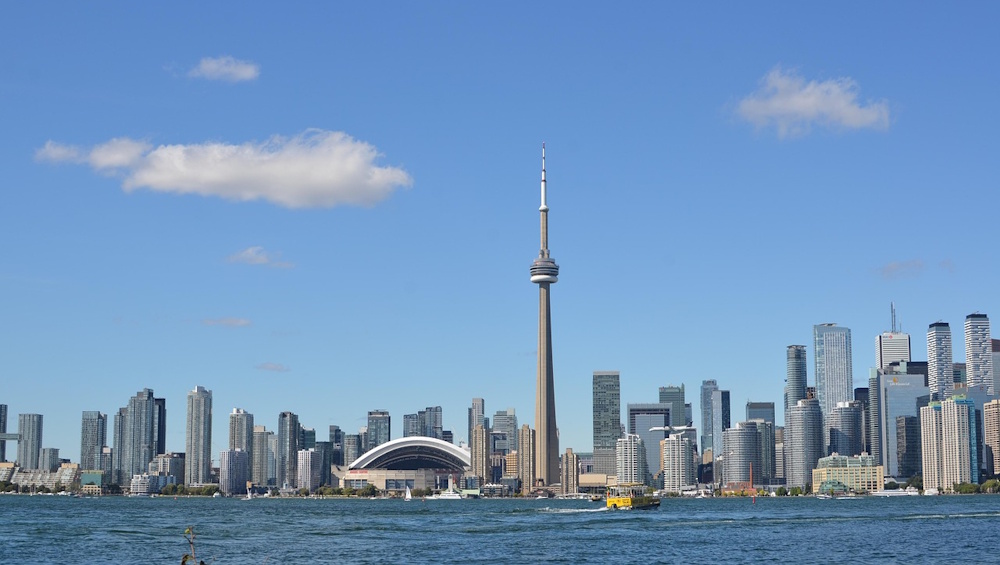
For years, the CN Tower wasn’t just Toronto’s signature landmark—it held the title of the world’s tallest freestanding structure after its completion in 1976. That matters because the tower fixed the city in the global imagination with one clean silhouette. But the postcard can mislead you.
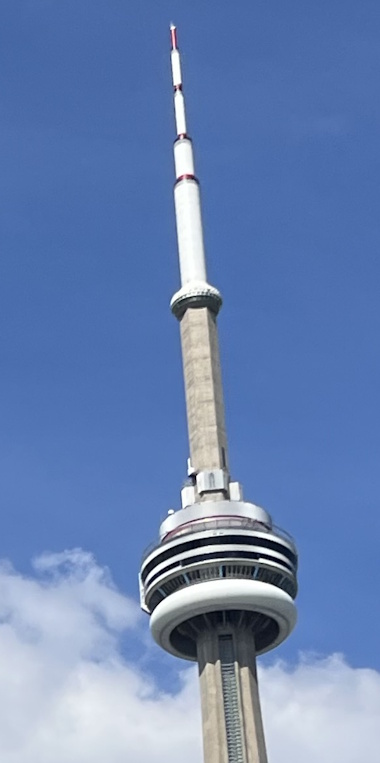
Toronto’s identity doesn’t really live in a single spire; it lives in the institutions and public spaces people keep using, funding, arguing over, and returning to.
Few cities have cultural anchors as recognizable as the Royal Ontario Museum and the Art Gallery of Ontario. The ROM pulls natural history, world cultures, and design into one place, while the AGO is one of the country’s major art museums and a serious part of Toronto’s cultural backbone, not just a stop for visitors.
What’s often missed is that these places do more than display collections—they shape how the city sees itself: curious, public-facing, and willing to put big architecture in conversation with older buildings.
Then there’s the water, which changes the whole feel of the city. The Toronto Islands sit just offshore on Lake Ontario, giving the downtown skyline its best-known viewing angle, but they also prove that Toronto isn’t only glass, concrete, and finance. A short ferry ride gets you beaches, parkland, and car-light space that feels almost like a rebuttal to the city’s density.
Big institutions deepen that picture. The University of Toronto enrolled 102,431 students in Fall 2024–25, including 29,449 international students from 175 countries and territories, according to the university. That kind of scale gives Toronto intellectual weight as well as visual presence.
If you want the simplest read on the city, start with the tower. If you want the honest one, look at the museums, the waterfront, and the institutions people actually build their lives around.
Why Toronto matters economically, but not cheaply
1,623,720 jobs is a huge number for one city, and it tells you exactly why Toronto carries so much economic weight. According to the City of Toronto’s 2025 Employment Survey, just over half of those jobs, 50.1% were office positions, which fits the city’s reputation as one of North America’s biggest finance and tech centres.
This is where the Toronto Stock Exchange sits, and where Canada’s major banks; RBC, TD, Scotiabank, BMO, and CIBC have a major presence. If you want a quick explanation for why money, firms, and skilled workers keep clustering here, that’s it.
Tech matters too, but finance is still the city’s sharpest signal to the rest of the country. Toronto isn’t just a place with big-company logos on towers; it’s a place where deals are financed, companies are listed, and careers can scale fast. I’d argue that’s the real reason the city keeps pulling in ambition from across Canada and far beyond it: the concentration of institutions is hard to match.
But success has a price, and in Toronto that price is painfully literal. According to CMHC’s 2025 rental survey, the average turnover rent for a two-bedroom purpose-built apartment was $2,547. That was down slightly from $2,612 in 2024, yet it still isn’t cheap by any normal standard. Condominium apartment vacancy was just 1.0%, which means even when the market softens a bit, choice stays tight.
That’s the tradeoff at the heart of the city. Toronto creates opportunity, higher-paying work, and access to industries that shape the national economy… but the same demand pushes housing costs and everyday living expenses high enough to squeeze the people who make the city run. Opportunity is real here. So is the bill.
Conclusion
Toronto matters because it compresses a lot of Canada into one city: political weight, global migration, major schools and transport links, and an economy that keeps pulling people in even when the cost of living pushes back. That tension is what’s often missed.
The same place that draws 46.8 million Pearson passengers and more than 102,000 U of T students also asks residents to navigate high rents and tight housing.
If you want the smartest way to read these facts about Toronto, don’t treat them as trivia. Treat them as clues. They explain why the city feels so ambitious, so crowded, and so hard to ignore—and why Toronto’s biggest story is no longer whether it matters, but how much pressure it can absorb while still working.
Frequently Asked Questions
What is Toronto best known for?
Toronto is best known for being Canada’s biggest city and a major center for business, film, sports, and food. People also know it for the CN Tower and its mix of neighborhoods, which gives the city a much more local feel than a single skyline shot suggests. That mix is what makes Toronto stand out.
Is Toronto a good city to visit without a car?
Yes, and that’s one of the smartest ways to see it. The subway, streetcars, and buses cover a lot of ground, so you can get around without renting a car and fighting traffic. Parking is expensive and annoying, so skipping the car usually saves you time and money.
What kind of weather should I expect in Toronto?
Toronto gets real seasons, not just a mild version of them. Summers can be hot and humid, while winters are cold enough that you’ll want a proper coat, boots, and layers. The surprise for many visitors is how quickly the weather can swing, especially near the lake.
Is Toronto expensive for tourists?
Yes, Toronto can be pricey, especially for hotels, downtown meals, and major attractions. But you don’t have to spend big to enjoy it, because the city has plenty of free neighborhoods, parks, and waterfront spots. Smart planning makes a big difference here.
What makes Toronto different from other Canadian cities?
Toronto feels bigger, faster, and more international than most Canadian cities. You’ll hear tons of languages, see a wide range of cuisines, and notice that each neighborhood has its own personality. That variety is the point, and it’s what makes the city feel alive without trying too hard.