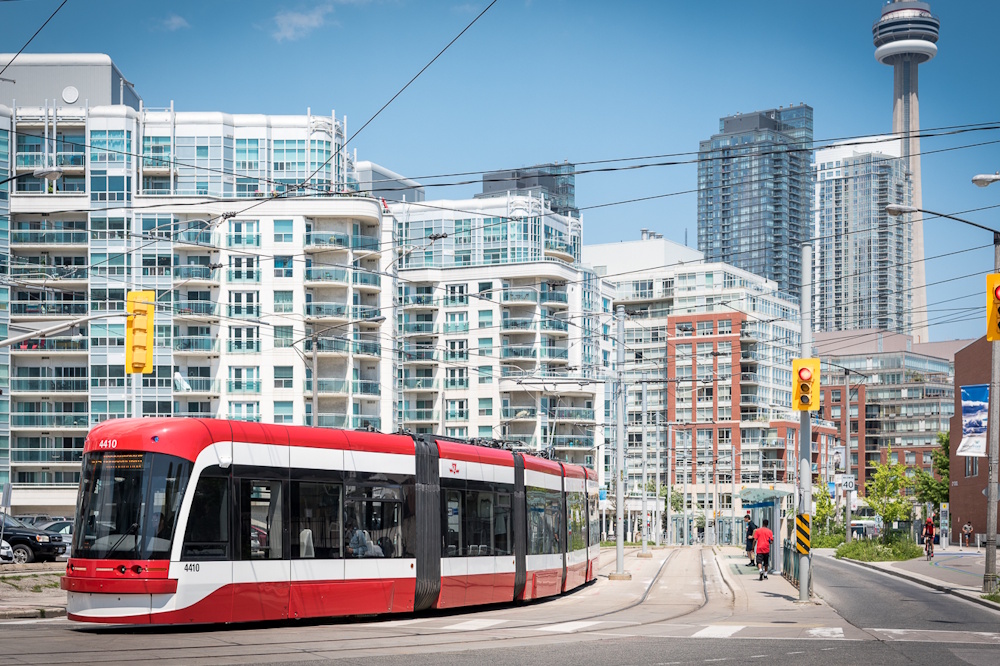
Toronto transit infrastructure Eglinton Crosstown 2026 arrives with a number that’s hard to ignore: $6.71 billion in recorded cost by March 31, 2025, before the line even welcomed its first riders. That’s the price tag hanging over a project that was finally scheduled to open on February 8, 2026, stretching 19 kilometres with 25 stops and links to three TTC subway stations. The scale is real. So is the frustration. What makes Eglinton matter, though, isn’t just that it took forever—it’s that Toronto was already pushing nearly 420 million TTC trips in 2024, with weekday demand topping 1.48 million rides on the busiest day. This line didn’t arrive in a calm system. It arrived in a city already straining at the seams, after years of disruption for businesses and neighbourhoods that were asked to wait far longer than they should have. That tension is the whole story.
Where the Eglinton Crosstown stood by 2026
Fifteen years after construction began in 2011, the line was finally set to open to riders on February 8, 2026, according to Metrolinx’s February 2026 rapid-transit update. That date matters because the project was once expected to open years earlier; by 2026, the striking fact wasn’t just that the route existed, but how a relief line had spent so long in limbo that it became part of the strain it was meant to ease.
The basic shape of the service was clear by then: about 19 kilometres across Eglinton, with 25 stops and connections to three TTC subway stations, as outlined by Metrolinx. For readers trying to pin down what “open” actually meant, that was the core baseline. This was not a partial demonstration segment or a short starter line. It was the full Crosstown corridor as planned along the central route.
Control, though, was split in a way that trips people up. Metrolinx owned the line as a provincial transit project, while the TTC was set to operate the service once it opened. That division sounds tidy on paper, but it also shaped the politics around accountability: one agency delivered the asset, another faced riders every day when trains started running. I think that split explains why public frustration often felt so diffuse. Everyone knew who was involved; fewer people could tell who was answerable for what.
The scale by the eve of opening was hard to ignore. Metrolinx’s audited financial statements put cost incurred to date at $6.709 billion as of March 31, 2025. Even more telling, the books show $10.492 million paid in 2025 to Crosslinx Transit Solutions for support tied to community and developer relations. That’s a revealing number. It shows the project’s burden wasn’t only concrete and rails, but the long, expensive management of disruption while Toronto waited.
So by 2026, the Crosstown stood in an awkward but important place: no longer a promise, not yet old enough to fade into the network, and still carrying the weight of the years it took to arrive.
Why Eglinton matters to Toronto transit congestion
The most consequential thing about this route is that it turns Eglinton from a slow surface slog into a cross-city spine that actually links places people already move between every day. Mount Dennis isn’t just a western terminal; it’s where local TTC service meets GO Transit at the Kitchener corridor, which matters if you’re trying to stitch together trips instead of riding one vehicle from start to finish. At the other end, Kennedy ties the line into Scarborough-bound travel. In between, Eglinton West and Yonge-Eglinton connect dense residential districts, job clusters, and one of the city’s most important transfer points at Line 1 via Eglinton station. On paper, that sounds tidy. In practice, it means east-west travel is no longer forced to behave like a series of north-south detours.
Before the new line, Eglinton’s bus service could be frequent and still fail riders at the exact moment reliability mattered most. That’s the limit of buses on a crowded arterial: you can add service, but you can’t add immunity from traffic, turning vehicles, collisions, weather, and bunching. Anyone who used the corridor regularly knew the tradeoff. The TTC could show up often, but it couldn’t promise that a trip across midtown would take anything close to the same time twice.
That’s why this corridor matters more than a single LRT line should. The TTC recorded nearly 420 million trips in 2024, including 204 million on buses, according to the TTC, and average business-day ridership topped 1.3 million passengers. Those numbers tell you the system was already under pressure before Eglinton rail service entered the mix. My view is simple: when one east-west corridor can absorb demand that would otherwise stay on buses or spill into car trips, it does more than help its own riders.
But speed alone won’t win people over. The real test is whether riders who’ve learned to budget extra time because traffic can wreck a “reliable” TTC trip actually change their habits—leaving the car at home, skipping the awkward bus-subway-bus workaround, or trusting an east-west trip at rush hour enough to plan around it. If that shift happens, Eglinton eases congestion in a way buses never fully could. If it doesn’t, the line will still be useful, just not transformative.
What kept the project delayed so long
The most damaging delays weren’t always in the tunnels; they were in the relationships supposed to keep the job moving. Crosslinx Transit Solutions, the private consortium responsible for designing, building, financing, and maintaining the line, ended up in prolonged conflict with Metrolinx over who was responsible for missed milestones, changed conditions, and recovery plans. That kind of dispute does more than create bad headlines. It slows decisions, hardens positions, and turns every technical setback into a contractual fight. What’s often missed is that a project can look physically advanced and still be badly stuck if the people running it stop operating as one team.
Utility relocation was another drag, and this wasn’t some minor pre-construction nuisance. On a built-up corridor like Eglinton, moving hydro, water, gas, telecom, and other buried infrastructure meant working around assets that were old, crowded, poorly documented, or still needed to stay live while streets above kept functioning. That creates a brutal sequencing problem: one crew can’t finish until another clears space, and one surprise underground can ripple into months of rework.
Then came the stations. Yonge Street and Black Creek Drive weren’t simple boxes in the ground; they were complex builds in dense, constrained areas where traffic, utilities, adjacent properties, and underground conditions all collided. Tunnel boring gets the public attention because it’s dramatic, but station fit-out, systems integration, emergency egress, vertical circulation, and finishing work in tight urban sites can be slower and messier. I’d argue that’s where public understanding broke down most. People see a tunnel completed and assume the hard part is over. It usually isn’t.
The sharpest contrast is between what Toronto was told in the 2010s and what kept happening afterward. Early timelines suggested a fairly clear path to service, but those dates kept moving as unresolved construction issues turned into repeated schedule revisions. Late delivery on a megaproject isn’t shocking. What was surprising was how often the biggest obstacles were coordination failures above ground and on paper, not just rock, concrete, and excavation below it.
What riders and neighbourhoods gained, and what they gave up
A faster trip across Eglinton came at the price of years of broken sidewalks, fenced-off storefronts, and blocks that looked half-finished long after patience ran out. That’s the contradiction at the heart of the line: as a transit investment, it fixes a real problem; as a street-level experience, it asked nearby residents and merchants to absorb disruption far beyond what most corridors could tolerate.
Small businesses took the hit first. Around long-running work zones, foot traffic didn’t just get inconvenient — it became confusing, indirect, and easy to avoid. When customers have to zigzag past hoarding, narrowed walkways, dust, noise, and shifting entrances, many simply stop coming. The fact that Metrolinx-backed relief even became necessary tells you how serious the damage was: Toronto Life reported that Metrolinx provided $1.38 million to the City of Toronto in 2022 to support 11 Eglinton West BIAs during construction impacts. That kind of funding helps, but it doesn’t recreate years of lost visibility or rebuild a neighbourhood main street overnight.
For riders, though, the upside is hard to dismiss. Midtown gains a far more direct east-west option through one of the city’s busiest transfer zones, Scarborough gets a more reliable connection into the rest of the network than bus-only travel could offer, and the western corridor near Mount Dennis gets a stronger link into jobs, schools, and regional service. What’s often missed is that capacity matters as much as speed. Replacing packed, bunching bus service with rail means more room, more consistency, and fewer trips shaped by traffic signals and curb-lane chaos.
Still, access doesn’t improve evenly just because tracks are in the ground. Some blocks will feel newly connected the moment stations open; others will spend years recovering from construction-era vacancies, changed traffic patterns, and streetscapes that no longer work the way local businesses relied on. I think that’s the honest way to judge the Crosstown: not as a clean win or a failure, but as a project that makes citywide movement better while leaving some communities with a very fair question about who paid the heaviest local cost.
What Toronto transit infrastructure still needs after 2026
The hardest truth after Line 5 opened is that one finished corridor doesn’t fix a network that still has the same bottlenecks, the same slow buses, and the same habit of asking riders to wait for the next big promise. That’s the real tension here: the Crosstown can work well in service terms and still expose a larger failure in how Toronto expands transit. One major line gets built, but the rest of the city keeps lining up for the same kind of relief.
The next pressure points aren’t abstract. They’re already on the capital map. Ontario Line construction will keep reshaping travel patterns into the downtown core for years, while the Gardiner work continues to squeeze east-west movement near the waterfront and push more demand onto parallel transit corridors. That matters because downtown congestion doesn’t stay downtown; it ripples outward through feeder bus routes, transfer stations, and overcrowded alternatives. My view is simple: if planners treat each project as self-contained, riders pay for that mistake every day.
Eglinton itself wasn’t the end of the job. Metrolinx says the west extension from Mount Dennis to Renforth Drive adds 9.2 kilometres and seven new stations, with projected demand of up to 69,700 daily rides and 37,500 more people within walking distance of transit. According to the City of Toronto, that follow-on work still included 6.4-kilometre twin tunnels, another roughly 500 metres of tunnelling near Mount Dennis, and a 1.5-kilometre elevated guideway package as of 2025. In other words, the corridor’s biggest lesson may be that partial completion is not completion.
Just as important, Toronto still needs surface transit priority on corridors that won’t get a subway or LRT anytime soon. Finch, Sheppard, and Kingston Road can’t keep operating as if painted lanes and occasional signal tweaks are enough. If buses spend half their value stuck in mixed traffic, the city repeats the same problem on a cheaper scale: lots of announced capacity, not enough real speed. Bus lanes, transit signal priority, stop consolidation, and tougher enforcement aren’t glamorous, but they move riders now.
The policy lesson is blunt. Toronto needs faster delivery, tighter contracts, and much less fantasy in public timelines. Optimistic dates may calm headlines for a while, but they destroy trust when they slip again and again. What the city should demand next is boring competence: procurement that assigns risk clearly, construction plans that account for utility and streetscape conflicts early, and schedules built with contingency instead of wishful thinking. After 2026, that’s what better transit expansion looks like—not just another map, but a system that can actually deliver the next corridor before the last one fades from memory.
Conclusion
The Eglinton Crosstown’s 2026 opening changed Toronto’s transit map, but it also exposed the real lesson of big-city infrastructure: finishing one line doesn’t solve a network under pressure. Eglinton matters because it adds badly needed east-west capacity and creates a corridor that could eventually cut up to 6.5 million car trips a year, yet even that win sits beside the unfinished west extension and the scars left by years of construction. My view is simple: the project should be judged by two standards at once—whether it improves daily travel now, and whether Toronto learns how not to make riders and local businesses pay such a long, chaotic price next time. A city this large can’t afford transit delays to become normal.
Frequently Asked Questions
Is the Eglinton Crosstown opening in 2026?
That’s the big question, and the honest answer is that 2026 is the year people are watching, not a guaranteed opening date. If you’re planning around it, treat the timeline as active but still subject to change. That’s frustrating, but it’s better than pretending the schedule is locked when it isn’t.
What part of Toronto will the Eglinton Crosstown help the most?
The biggest impact will be along Eglinton itself, especially for people moving east-west across midtown without touching the subway. That matters because it should cut down on the slow, frustrating bus crawl that so many riders deal with now. For nearby neighborhoods, it also changes how people connect to jobs, schools, and other transit lines.
Will the Eglinton Crosstown actually reduce traffic?
Yes, but not in the dramatic way drivers hope for. Transit projects don’t erase congestion overnight; they pull some trips out of the road network and make the corridor work better for people who already live and travel there. The real win is reliability, not some magic traffic cure.
How does the Crosstown fit into Toronto’s transit network?
It fills a missing middle layer between local buses and the subway, and that’s why it matters. Without that connection, a lot of cross-town travel gets forced onto routes that weren’t built for it. You’ll feel the difference most when transferring between lines or trying to cross the city without going downtown first.
Why has the Eglinton Crosstown taken so long?
Because big transit projects are messy, and this one has had more moving parts than most people expected. Underground work, surface construction, system integration, and the need to keep the city moving all slow things down. The surprise is that delays don’t just add time — they also raise the stakes, because every extra year makes riders more impatient.