
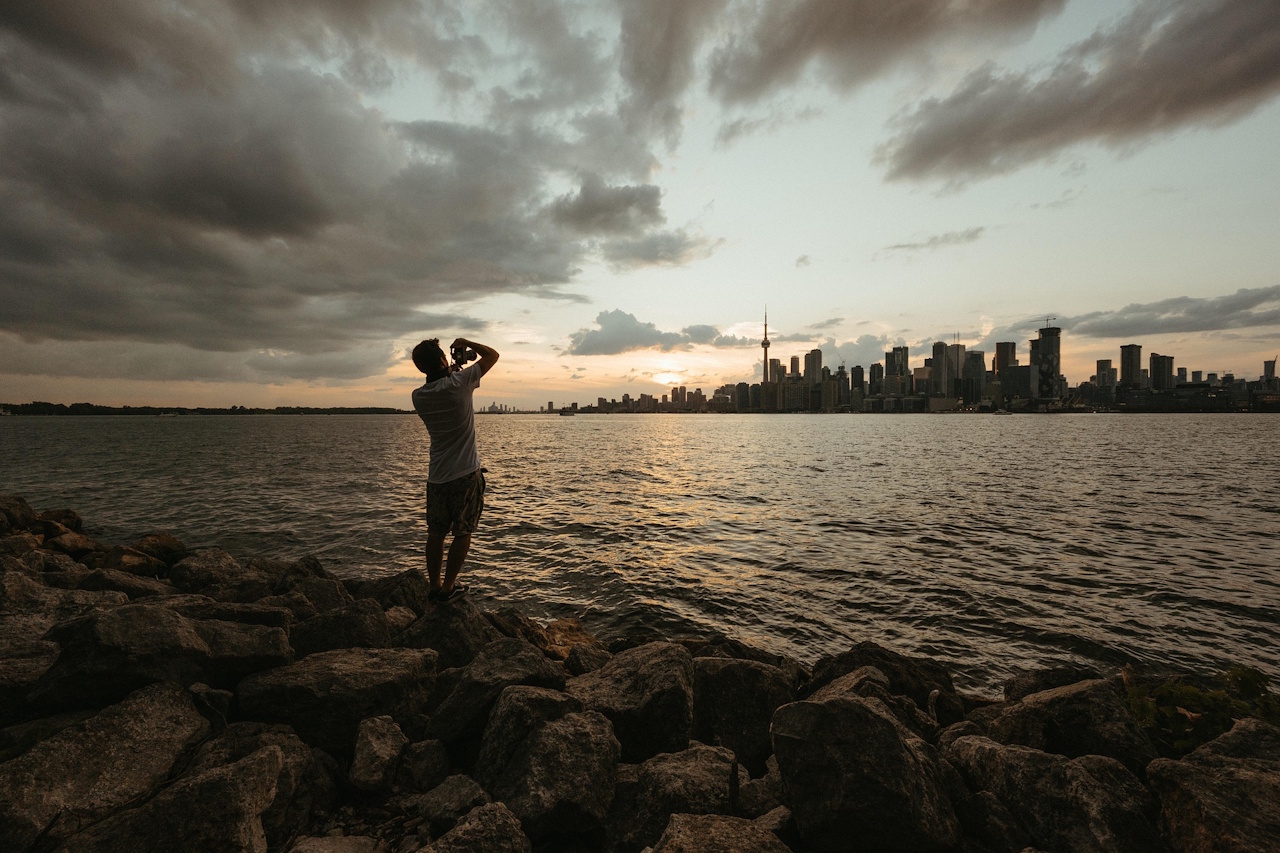
Things to do in Toronto get easier to judge once the scale is clear: the city welcomed 9 million overnight visitors in 2024, and its Downtown West district alone draws more than 19 million people a year. That volume can make the obvious stops feel overrun, but it also reveals the city’s real advantage: many of the strongest sights sit close enough to combine on foot, by subway, or by streetcar. The CN Tower, AGO, ROM, PATH, waterfront, and island ferries work best when treated as parts of a connected route, not isolated checkboxes.
This guide focuses on four picks that justify the time, with attention to what is easy to reach, what rewards walking, and when a day trip outside the core earns its place. Driving is the weak option here; the TTC and a good pair of shoes do more.
Top downtown sights that are actually worth the time
Toronto’s biggest downtown sights are busy because demand is real: in 2024, the city welcomed 9 million overnight visitors and generated a record $8.8 billion in visitor spending, according to Destination Toronto. That crowd pressure matters most around Union Station, where the smartest move is not to scatter across the core. The highest payoff route stays tight: arrive by subway or GO Transit at Union, walk west toward the CN Tower, and pair it with Ripley’s Aquarium of Canada next door.
Neighbourhoods that reward walking over driving
Kensington Market and Chinatown give the biggest payoff per block because the two areas blur into each other without needing a transfer, a cab, or a plan. Start around Augusta Avenue, Baldwin Street, or Kensington Avenue for vintage shops, bakeries, grocers, cheese counters, coffee, and casual food, then drift south or east toward Spadina Avenue for dumplings, noodles, barbecue, bubble tea, produce stands, and busy storefronts.
This is not a polished attraction zone, and that is the point. It works best as a browsing district where the reward is the density of small stops, not one mandatory landmark.
Queen West is the stronger choice for visitors who want a cleaner retail-and-café crawl without losing the local feel. The useful stretch runs west from the downtown core through independent shops, small galleries, sneaker stores, design shops, bakeries, and patios that are better handled on foot than by hopping in and out of rides.
The 501 streetcar runs along Queen, so it is easy to bail out when the walk stops paying off. The best version is selective: browse the blocks that look active, skip the generic storefronts, and do not treat the entire corridor as equally essential.
The Distillery District is the easy win for a more contained walk because its preserved brick buildings, cobblestone lanes, and pedestrian-only layout remove the usual traffic noise from the experience. The former industrial site is now filled with restaurants, galleries, shops, public art, and seasonal programming, including the popular winter market period when crowds spike hard.
It is the most curated of the three areas, which makes it convenient but less spontaneous. Go earlier in the day for space, especially during events, and treat it as a compact wander rather than an all-day neighbourhood expedition.
These neighbourhoods work because walking is not just transportation there; it is the main activity. Kensington Market and Chinatown are best for food and texture, Queen West is best for shopping and cafés, and the Distillery District is best for an easy pedestrian zone with a strong visual payoff. None needs a car, and each gets worse when the visit is planned around parking instead of simply arriving nearby and walking.
Transit-first ways to move between districts
The fastest Toronto itinerary is often a triangle: Union for the core, Spadina or St. Patrick for central-west stops, and Broadview for the east side. Union Station is the practical anchor because it connects subway service, GO Transit, UP Express, the PATH, the waterfront, and ferry access without needing a car. It is not the prettiest place to linger, and the concourses can feel messy at peak times, but it keeps the main downtown transfer simple.
For central neighbourhoods, St. Patrick, Spadina, and Broadview do more work than they get credit for. St. Patrick is the cleanest subway stop for the AGO and the western edge of the hospital and university district.
Spadina Station links Line 1, Line 2, and the Spadina streetcar, making it useful when moving between Bloor, Chinatown-adjacent blocks, and the waterfront direction. Broadview Station is the better east-side launch point, especially for streetcar connections into Riverdale and farther along the Danforth-adjacent east end.
Streetcars are the right tool for longer east-west stretches when walking stops being efficient. Queen, King, and Dundas all carry routes that cut across the city in a way the subway grid does not, and they are especially handy for moving between shopping, food, galleries, and theatre areas without doubling back to a subway platform. The tradeoff is speed: streetcars are practical, not magic, and they slow down when traffic, construction, sports crowds, or festivals take over the road.
The scale of local ridership supports planning around transit rather than treating it as a backup. According to the Toronto Transit Commission, the system carried 419.8 million riders in 2024, including subway, bus, and streetcar trips.
For short hops, TTC usually beats ride-hailing once wait time, one-way streets, and downtown traffic are factored in. During rush hour or major events, the smarter move is checking live service alerts and switching between subway and streetcar rather than committing to one perfect route.
Day-trip choices for when the core is not enough
A zoo visit can eat close to half a day before the animals even enter the plan, which is exactly why these outer stops need stricter editing than downtown sightseeing. The worthwhile choices are the ones with a clear payoff: a major park, a proper historic house, or a museum-level destination that justifies the ride.
High Park is the easiest add-on because it sits directly on Line 2 at High Park station, making it simple to reach without turning the day into a transfer puzzle. The park earns the trip for its ravine trails, pond-side walking, big lawns, and cherry blossoms, which usually draw heavy crowds around late April and early May. Go early during blossom season or skip peak weekends; the photos are not worth shuffling through packed paths at midday.
Casa Loma is the main historic house visit that makes sense from the core. Dupont station puts it within walking distance, though the final approach involves an uphill stretch and stairs depending on the route.
The appeal is straightforward: towers, furnished rooms, tunnels, gardens in season, and enough architectural detail to feel different from another museum stop. It works best as a half-day outing rather than a quick detour, especially when paired with nearby cafés or a slower walk through the surrounding residential streets.
The longer trips need more discipline. The Toronto Zoo recorded 1,364,477 total guests in 2024 and has 10 km of walking trails plus five tropical pavilions, according to the Toronto Zoo, so it is not a casual afternoon stop. Reaching it by TTC from downtown usually means subway plus bus and a long return ride, so it belongs on the schedule only when a full walking-heavy day is the point.
The Aga Khan Museum is the cleaner choice for a quieter culture-focused outing, but it still sits outside the easy central circuit near Eglinton Avenue East and Wynford Drive. Transit from downtown generally means subway plus bus, with enough travel time to make rushing a bad call. These trips are worth doing when the core has already been covered; they are poor choices for a tight first day in Toronto.
Why the Best Toronto Plan Follows the Transit Lines
The strongest Toronto itinerary is not the one with the longest checklist. It is the one that respects distance, crowd patterns, and how the city actually moves. A subway ride to Museum or St. Patrick, a streetcar west toward Queen and Ossington, or a ferry from the foot of Bay Street changes the day more than another forced detour by car.
The practical move is to anchor each day around one corridor, then add nearby stops only when they fit on foot. That keeps energy for the places that need time: a major museum show, the PATH when weather turns ugly, the Islands on a clear morning, or the Zoo when a full walking day makes sense. In Toronto, good routing is not a detail; it decides what is worth it.
Frequently Asked Questions
Q: What are the best things to do in Toronto without a car?
A: The best no-car options cluster around the subway and streetcar network, especially downtown, Queen West, Kensington Market, and the harbourfront. Walking between nearby neighborhoods usually works better than trying to drive and park, since traffic and parking costs can eat up time fast. For most visitors, TTC access is the main filter for what is actually worth doing.
Q: Is downtown Toronto worth prioritizing over other neighborhoods?
A: Downtown is the most efficient starting point because it concentrates the CN Tower area, major museums, the waterfront, and the main transit lines. It is not the most interesting part of the city all by itself, but it makes moving between sights much easier. The payoff is convenience, especially for a short stay.
Q: What neighborhoods are best for walking around in Toronto?
A: Queen West, Kensington Market, the Annex, and the Distillery District are among the easiest areas to explore on foot. They each have a compact street pattern and enough cafes, shops, and side streets to justify a slow walk. Areas spread far apart are usually better linked by TTC than by trying to stitch them together on foot.
Q: How much time should be set aside for seeing Toronto’s main attractions?
A: A single day covers only one or two major areas well, because the city is large and transit hops still take time. Two to three days is a more realistic range for combining downtown sights with one or two neighborhoods. That schedule allows for walking, transit, and actual time at each stop instead of constant moving.
Q: What is the easiest way to get around Toronto for first-time visitors?
A: The TTC is the simplest option for most first-time visitors, especially the subway for longer cross-city trips and streetcars for downtown corridors. Rideshares and taxis can fill gaps, but they are not the most efficient way to move between neighborhoods during busy hours. For practical routing, plan around transit stations first and attractions second.