
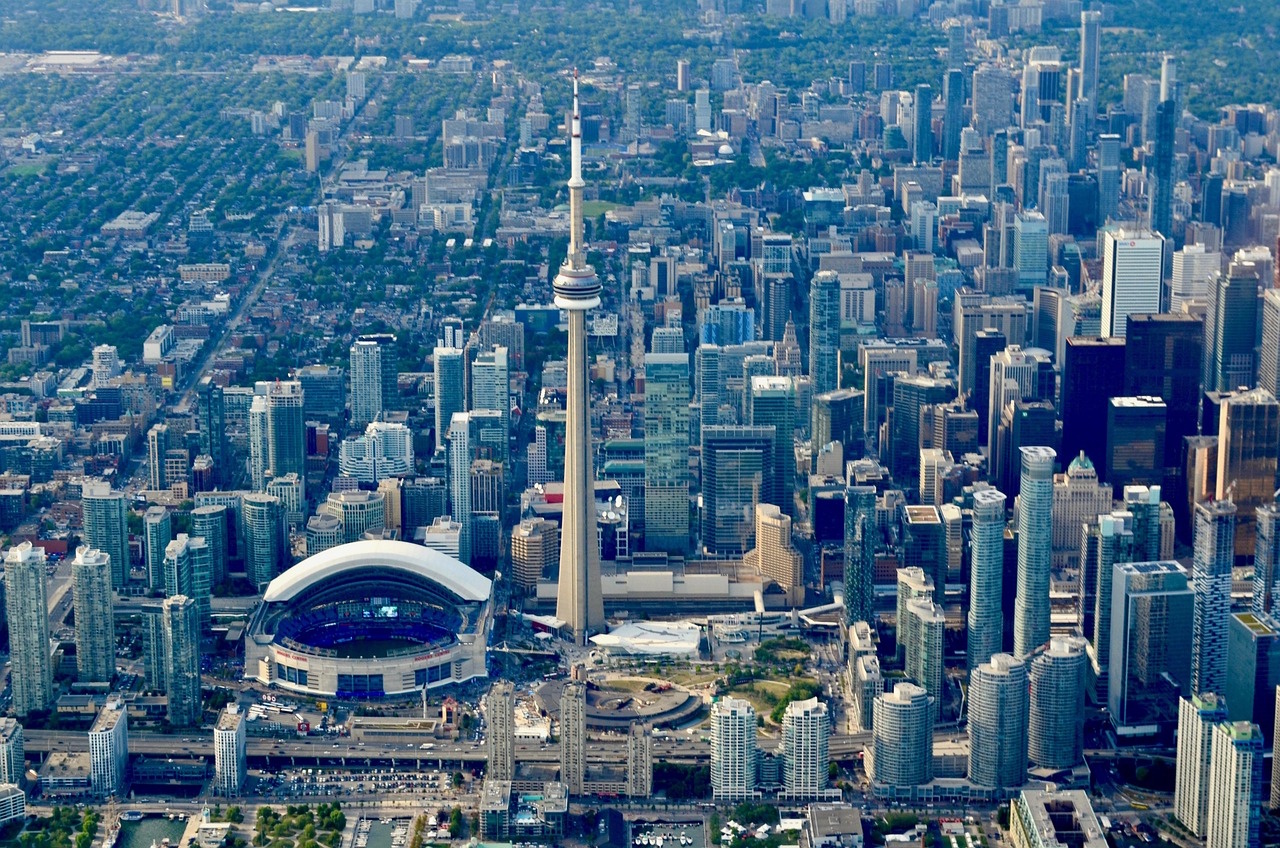
Is the CN tower worth it? At C$47 before tax for adult timed admission, the answer depends less on Toronto pride than on weather, timing, and whether the visit replaces another paid experience. The Tower is not a quick free viewpoint; CN Tower tells visitors to set aside about two hours, and the higher Top level costs C$59 for adults. On a clear day, that upgrade reaches 447 metres above ground and visibility can stretch to 160 kilometres, which changes the value calculation.
On a hazy afternoon with a packed sunset slot, the math gets less generous. The real choice is between basic observation access, the higher viewpoint, a meal at 360 Restaurant, or EdgeWalk. Each has a different price ceiling, time commitment, and payoff.
What the CN Tower actually offers
The standard visit is really three observation-deck experiences stacked above a sports-and-transit hub, not a long museum-style attraction. At the CN Tower, the LookOut Level is the core stop: indoor windows, wide city views, and the usual photo-taking circuit.
The Glass Floor adds the quick stomach-check moment, especially for first-timers, but it is a short feature rather than a separate major activity. The SkyPod, also sold as The Top, is the higher upgrade; according to CN Tower visitor information, it sits 447 metres above ground, which makes it most worthwhile when the forecast is clear rather than grey or humid.
EdgeWalk belongs in a different category from the observation levels. It is the tower’s premium thrill add-on, run as a separate outdoor harnessed walk around the exterior ledge rather than a calmer sightseeing stop.
CN Tower ticket information describes the full EdgeWalk experience as taking about 90 minutes, including roughly 30 minutes outside, so it changes the visit from “go up, look around, come down” into an adrenaline activity. For most visitors, that is not a casual upgrade; it is the reason to go.
Location is one of the tower’s strongest practical advantages. It sits beside Rogers Centre and close to Union Station, so arriving by TTC subway, GO Transit, UP Express, or streetcar connections is far easier than driving into the stadium-and-entertainment district. From Union, the walk is straightforward, and pairing the tower with the waterfront, a Jays game, or nearby downtown stops makes sense without needing a car.
The tradeoff is that the standard observation-deck portion can feel brief when conditions are poor or lines are slow. Canada Lands Company reported more than 1.7 million tower guests in the year ended March 31, 2025, which explains why peak periods and sunset slots can feel busy. Toronto also has other good skyline angles from parks, waterfront paths, and rooftop venues, so the tower’s appeal is less about being the only view and more about being the city’s most recognizable, easiest-to-reach high-altitude one.
How much time and money the visit takes
A standard CN Tower stop can cost a family with two youth more than C$160 before tax for what is often a 90-minute visit. As listed by the CN Tower, Adult Timed General Admission is C$47, The Top is C$59, youth and seniors pay C$34, and children aged 3–5 pay C$18; tickets can be bought up to 30 days in advance and prices exclude tax. Treat those as the online benchmark, not a universal door price, because online rates can differ from walk-up rates.
For a standard viewing visit, the realistic time commitment is about 1 to 2 hours. The shorter end fits a clear, uncrowded daytime stop with no lingering; the longer end is more realistic once timed entry, security screening, elevator waits, photos, and peak sunset crowds enter the picture. The ticket timing gets visitors inside at a selected slot, but once upstairs, the visit is not usually rushed in the way a timed museum entry can feel.
Getting there is the easy part, especially without a car. Union Station is the simplest approach for most visitors, with nearby PATH connections helping in bad weather and a short walk handling the final stretch. From the west side of downtown, the Spadina streetcar is also practical; the stop around Spadina Avenue and Bremner Boulevard leaves only an easy walk east.
The money question is less flattering than the transit question. TTC access keeps the practical travel cost low, while driving adds paid downtown parking and event-area traffic that rarely improves the day.
The tower is simple to reach, but the admission price can feel steep for visitors who mainly want one skyline photo and ten minutes at the glass. The value improves when the visit is treated as a proper downtown anchor, not a quick detour squeezed between other stops.
When the view is worth the trip
A clear post-storm morning can make the paid view feel like a different attraction from the same ticket scanned on a hazy July afternoon. Visibility is the main variable, and the strongest conditions are usually clear, dry days, especially outside summer haze or after a front has pushed humidity and pollution out over Lake Ontario. On the best days, the tower’s upper sightlines can reach 160 kilometres, according to CN Tower visitor information, which is the kind of range that makes the height feel meaningful rather than merely expensive.
Free and low-cost viewpoints change the value calculation. Riverdale Park East gives a clean skyline angle from the east end, with grass, space, and easy access from Broadview station or nearby streetcars. Polson Pier is better for a compressed skyline photo across the harbour, though the surrounding port-area roads make it less pleasant as a casual walk.
The Toronto Islands deliver the classic postcard view with water in the foreground, but the ferry adds time and weather exposure. None of these replaces the tower’s straight-down height, but they often beat it for repeat visitors who mainly want skyline photos rather than the landmark experience itself.
Sunset is not automatically the best slot. It can be excellent when the air is clear, because the lake, rail corridor, downtown towers, and western light all change quickly over a short period.
It can also mean glare, tighter timed-entry demand, and the heaviest crowding of the day, especially in school breaks, long weekends, and peak travel months. Night visits shift the appeal from distance to pattern: roads, condos, office towers, and the waterfront read more clearly as a lit city grid, while far-off visibility matters less.
The smartest move is to treat the tower as weather-dependent, not schedule-proof. If the forecast shows low cloud, rain, smoke, or thick humidity, the cheaper outdoor viewpoints are the better call, or the tower visit should be moved to a clearer window if tickets and plans allow. The payoff is strongest for a first Toronto visit on a sharp-weather day; after that, the city’s ground-level viewpoints usually give more value with less waiting around.
Who should go, and who can skip it
The tower is a better fit for a first Toronto trip than for a packed downtown day built around food, waterfront walking, and neighbourhood stops. First-time visitors who want the postcard version of the city should go, especially if a classic checklist stop matters more than squeezing maximum variety out of the day. Families also get a practical, contained attraction: one destination, predictable indoor facilities, and a clear payoff that does not require decoding Toronto’s neighbourhood geography.
Travellers watching costs should be more selective. A paid skyline view makes sense when it is the main event, not when it competes with lunch, transit fares, and several shorter stops nearby. Short downtown itineraries often get more from staying at street level, where the area around Harbourfront offers lakefront walking, public spaces, and easy access by the 509 streetcar without committing the day to a single ticketed attraction.
The strongest skip case is not that the tower is overrated; it is that Toronto has better add-ons for some schedules. Around Rogers Centre, a game day or concert day already gives the area a reason to be on the route, while the surrounding streets work better as a quick pass-through than a standalone plan. East of the financial core, St. Lawrence Market is the smarter choice for visitors who want food, old-city streets, and an easy walkable stop that fits neatly between downtown sights.
Signature does not mean compulsory. The tower is worth choosing for visitors who specifically want the famous view, an easy family attraction, or a landmark moment attached to a first trip. Visitors with one tight afternoon, a limited budget, or a stronger interest in markets, waterfront walks, and neighbourhood texture can skip it without missing the better version of their Toronto day.
The smarter call is weather first, ticket second
Treat the Tower as a same-day value check, not an automatic Toronto rite. If the forecast is clear, the skyline view is the point, and a two-hour block fits cleanly between waterfront, Rogers Centre, or Union Station plans, admission can make sense. If clouds flatten the view, shift the money to lunch or dinner at 360 Restaurant, where the minimum spend includes observation-level access, or skip the Tower and keep moving on foot and TTC.
Driving there adds cost without adding value; Union Station and the waterfront streetcars put the base within an easy walk. The practical rule is simple: pay for height only when the city is visible enough to justify the altitude.
Frequently Asked Questions
Q: How long does a visit to the CN Tower usually take?
A: Most visitors spend about 1 to 2 hours at the tower, depending on lines and how much time is spent at the observation levels. Going early in the day or later in the evening usually means a smoother experience. The EdgeWalk or dining reservations can add much more time.
Q: What is the best time to go to avoid crowds?
A: Weekday mornings are usually the calmest, especially outside school holidays and summer weekends. Sunset draws the biggest crowds because the city views are the main draw, so tickets around that time tend to sell out faster. If lines matter, an earlier slot is the safer choice.
Q: Is it better to book tickets in advance?
A: Yes, advance booking is the better option for most visits because it reduces the chance of long waits and sold-out time slots. This matters most during peak travel periods, weekends, and sunset hours. Walk-up tickets can work on quieter days, but they are less reliable.
Q: Can the CN Tower be combined with other downtown Toronto sights in one day?
A: Yes, it pairs easily with Ripley’s Aquarium, the Harbourfront, and the Entertainment District. The tower is right by Union Station, so TTC subway and GO Transit access make it simple to move around without a car. Walking between nearby stops is usually faster than trying to drive and park downtown.
Q: Who is most likely to enjoy the CN Tower?
A: First-time visitors, families, and anyone who wants a clear aerial view of Toronto usually get the most out of it. It is less compelling for people who already know the city well and do not care about skyline views or tourist-style attractions. The value is strongest when the weather is clear and visibility is good.