
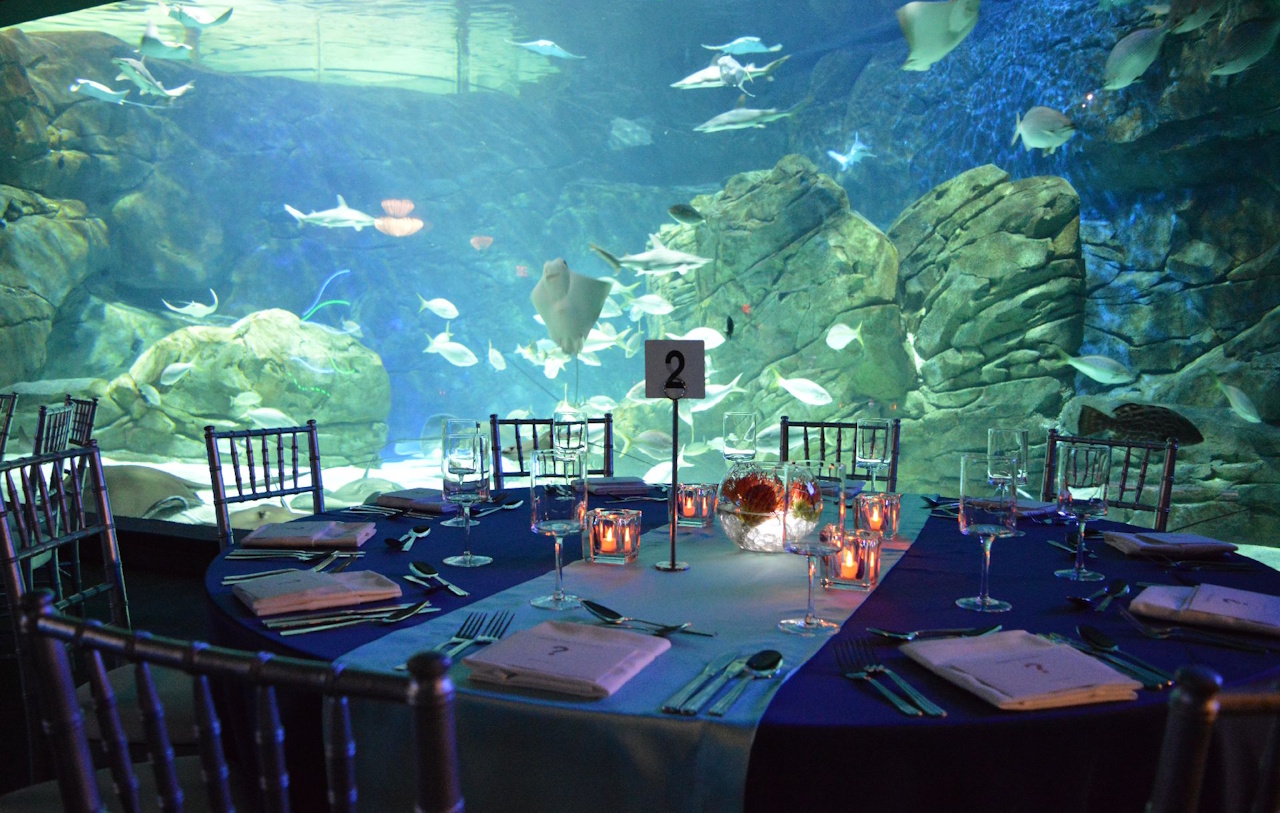
Ripley’s Aquarium of Canada sits at 288 Bremner Blvd., but the useful fact is that it is a 740-metre, roughly 8-minute walk from Union Station, not a place that needs a car. The downtown location matters because the best version of this visit is planned around transit, timed entry, and crowd flow, not parking. Inside, the scale is more serious than the tourist-block setting suggests: the facility holds about 5.2 million litres of water, uses more than 158,757 kg of salt, and runs pumps moving more than 68,000 litres per minute.
That engineering supports a visit that is usually worth 1.5 to 3 hours, not a whole day. The useful questions are simple: what the aquarium is actually good for, how to reach it cleanly by TTC or GO, and when to arrive so the timed-ticket system works in favour of the visit.
Where the aquarium sits in downtown Toronto
The aquarium sits in one of Toronto’s densest visitor pockets: just southeast of the CN Tower, beside the Rogers Centre and a short walk from the waterfront side of the Financial District. That location is the main practical advantage of Ripley’s Aquarium of Canada. It is not tucked into a suburban entertainment complex; it is embedded in the same downtown cluster as the city’s biggest landmarks, which makes it easy to pair with a tower visit or a walk along Bremner Boulevard without needing a car.
GO Transit/Metrolinx lists the aquarium at 288 Bremner Blvd., Toronto, and names Union Station as the closest GO station. That matters because Union is the main rail hub for GO trains, VIA Rail, UP Express, the TTC subway, and streetcar connections. Rome2Rio’s current route data puts the walk from Union Station to the aquarium at 740 metres, about 8 minutes, which is usually faster and less annoying than trying to move a car through the area before or after a major event.
The location is also what creates the headache. The CN Tower area pulls steady foot traffic, tour groups, game-day crowds, and people cutting between Union Station and the waterfront.
The simplest approach is to treat the aquarium as a downtown walking stop: arrive through Union, follow the indoor PATH or street-level route toward Bremner Boulevard, or walk over from the CN Tower plaza. Ripley Entertainment owns and operates three aquariums, and this Toronto site is the Canadian one in the middle of the city’s highest-pressure visitor zone.
What the visit is actually for
Attractions Ontario’s 2025–26 education guide puts the typical visit at 1.5–3 hours, which is the clearest way to frame the attraction: it is a compact stop, not a full-day plan. At its simplest, Ripley’s Aquarium of Canada is a public aquarium in Toronto, Ontario, built around an indoor marine-life route rather than a sprawling campus or museum-style day out.
The main reason to go is the controlled indoor experience: habitat galleries, large tanks, and close-up viewing that works regardless of what Toronto weather is doing outside. That makes it a practical pick on a wet afternoon, a freezing day, or a summer heat warning when wandering between outdoor sights starts to lose its charm. Ripley’s own exhibit information gives the facility some useful scale without turning it into a hype exercise: the aquarium reports about 5.2 million litres of water onsite, and its Kelp Forest gallery alone holds almost 420,000 litres while using a wave maker to simulate British Columbia shoreline surge conditions.
That indoor advantage has a real tradeoff. When the weather is bad, the same logic brings more people inside, so the route can feel slower than the listed visit time suggests, especially where people stop to take photos or bunch up around popular tanks. The better expectation is a focused marine-life visit with a strong weather-proof payoff, best paired with nearby downtown plans rather than treated as the whole day’s anchor.
How to get there without a car
A car is the least useful way to arrive here; the subway, streetcar, and a short downtown walk do the job with less friction. The main transit anchor is Union Station, which connects TTC subway service with GO Transit, UP Express, and the PATH network. For most visitors already in Toronto, the simplest move is to take Line 1 to Union, leave the station toward the west side of the rail corridor, and walk the remaining stretch above ground using the stadium and tower as landmarks rather than fussing with a transfer for a very short last leg.
Streetcars make sense when the starting point is already along the waterfront or west of downtown. The 509 Harbourfront route is the useful TTC reference here because it runs through Union Station and serves the Queens Quay corridor, placing riders close enough for an easy walk to the aquarium area. According to the Toronto Transit Commission, a single adult pay-as-you-go fare is $3.30 with PRESTO, debit, or credit, and children 12 and under ride free, which keeps the trip straightforward for families arriving without a car.
Walking is the better choice from nearby downtown landmarks. From the CN Tower, Rogers Centre, and the South Core office-and-hotel cluster, the aquarium sits within the same compact tourist zone, so transit is unnecessary once already in that pocket.
The practical caution is timing: game days, concerts, and event nights push heavy foot traffic around Union Station, Front Street, and the stadium approaches. Transit still wins, but arriving a little earlier and avoiding the post-event crush makes the difference between an easy downtown walk and a slow shuffle through crowds.
How to plan the visit around crowds
The easiest crowd mistake is showing up early for a timed ticket and assuming the queue will bend around the plan. According to Ripley’s 2026 ticket guidance, timed admission uses a one-hour arrival window, and early entry is not allowed during peak periods such as summer, holidays, March Break, and long weekends. That makes the entry slot the anchor of the day, not a loose suggestion; meals, coffee, and nearby sightseeing need to sit around it rather than compete with it.
Weekends, school breaks, and summer afternoons are the periods to avoid when flexibility exists. A weekday morning is the cleanest play, while a later visit can work well when the official schedule supports it. The after-lunch window is the one that most often feels squeezed: more families are out, the surrounding attractions are active, and people tend to arrive in clusters rather than spreading out naturally.
The location near the CN Tower makes it easy to combine the aquarium with other downtown sights on foot, but that convenience has a limit. Pairing one nearby stop with the aquarium can save time on transit and keep the day simple. Stacking the tower area, the waterfront, a meal, and another paid attraction around the same timed entry turns a compact route into a crowded checklist, especially on summer afternoons.
The official calendar deserves a quick check before locking in plans. Ripley’s 2026 schedule listed 10 early-closure dates from September 15 to December 8, 2026, which shows why relying on assumptions about evening availability is a bad move. When the schedule is tight, the better plan is to protect the aquarium slot, leave space before and after entry, and drop the extra stop first if the day starts running behind.
Why the Union Station approach is the smarter plan
Toronto rewards visitors who treat distance and timing as part of the plan. The aquarium is close enough to Union Station that walking beats waiting around for a short streetcar hop in decent weather, especially when crowds are building around Bremner Boulevard and the CN Tower.
The smarter move is to buy the ticket around a realistic arrival window, check for early closures before committing to an evening slot, and build the visit into a downtown route that stays on foot or transit. A $3.30 TTC fare, free rides for children 12 and under, and an 8-minute walk from the regional rail hub make the car the least useful part of the plan.
Frequently Asked Questions
Q: Where is Ripley’s Aquarium of Canada located in Toronto?
A: It sits in downtown Toronto, just southeast of the CN Tower. That puts it in the core tourist area, with easy access on foot from Union Station or the waterfront corridor. For most visitors, transit is the simplest way to get there.
Q: How do I get to the aquarium without driving?
A: The easiest route is usually by TTC to Union Station, then a straightforward walk west and south through the core. Streetcars and subway connections make the area easy to reach without dealing with parking. Walking from nearby downtown sights is also practical because the site is tightly packed into the core.
Q: Is Ripley’s Aquarium of Canada part of a larger company?
A: Yes. It is one of three aquariums owned and operated by Ripley Entertainment. That matters because the aquarium follows the company’s standard public attraction model rather than a standalone nonprofit museum format.
Q: How long does a visit usually take?
A: Most visits run a few hours, depending on crowd levels and how much time is spent at each gallery. The compact downtown location makes it easy to combine with other nearby stops in the same day. A rushed visit is possible, but a slower pace usually makes more sense for families and first-time visitors.
Q: What is the best time to visit to avoid crowds?
A: Earlier in the day and on weekdays are usually the least crowded times. The aquarium’s downtown location means it can get busy when major events, school groups, or weekend traffic pile up nearby. Planning around TTC travel times also helps avoid arriving during the busiest windows.