
The Art Gallery of Ontario drew 672,244 visitors in 2024/25, but the better measure of its scale is what sits behind that crowd: 135,000 square feet of galleries and roughly 114,768 works. The AGO is not a quick “stand in front of the famous painting and leave” museum. Its strongest draws are specific: more than 950 Henry Moore objects, a photography collection of more than 70,000 objects, major Indigenous and Canadian holdings, and a changing exhibition program that presented 20 shows in 2024/25.
That size makes planning matter. A good visit means choosing the right galleries first, using the TTC instead of fighting downtown traffic, and knowing when the $30 ticket, $40 Annual Pass, or free first-Wednesday evening actually makes sense. The goal is simple: see the best of the AGO without wasting time.
What the AGO is known for
The gallery reported 672,244 visitors in 2024/25, alongside 135,000 square feet of gallery space and 20 exhibitions, according to the AGO Impact Report. That scale matters for a short visit: this is not a single-masterpiece museum, and trying to “do it all” turns the place into a blur. The better play is to treat it as a few strong collections under one roof and ignore the rest until there is more time.
The full name is the Art Gallery of Ontario, and its main address is 317 Dundas Street West, near OCAD University and Grange Park. That location gives the museum a different feel from Toronto’s more isolated attractions. It sits in a walkable downtown pocket, close to Queen West, Chinatown, Kensington Market, and the University Avenue hospital corridor, so it works well as part of a no-car day rather than a standalone trip.
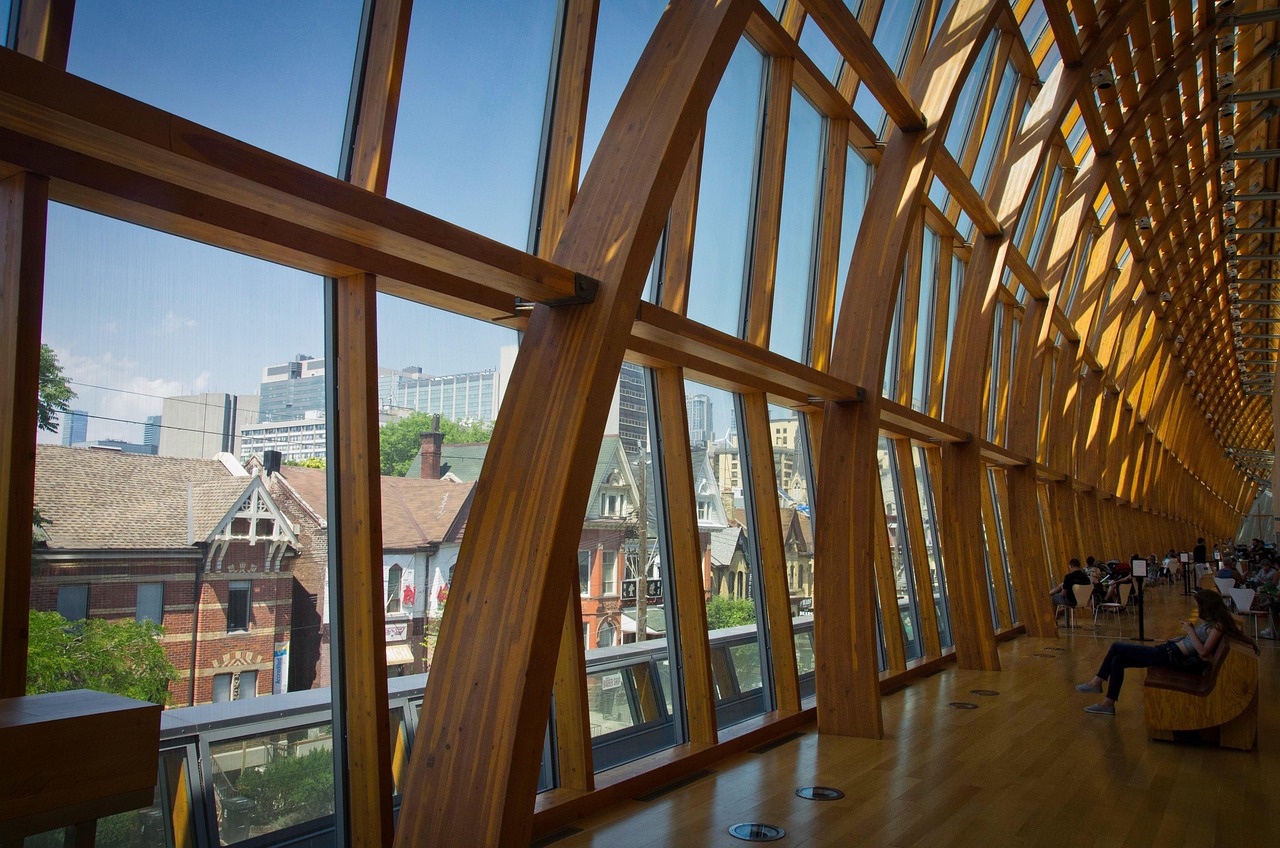
The building’s current visitor experience is heavily shaped by the 2008 redesign by Frank Gehry. The most obvious change is the long glass-and-wood frontage on Dundas Street, but the more useful change is inside: the renovation made the museum easier to read, with stronger circulation, more natural light, and a clearer sense of arrival. It still has the complexity of a large institution, but it no longer feels like a set of galleries stitched together without logic.
The collection is anchored by Canadian art, with the Thomson Collection of Canadian Art giving the museum one of its clearest identities. Indigenous works are also central to the AGO’s story, not a side corridor to check off, and they change how the Canadian material reads across time, land, and authorship. Major European holdings add the expected Old World weight, but they are not the only reason to come.
That mix is the main reason the AGO rewards repeat visits while still working for a tight schedule. A focused stop can cover Canadian and Indigenous strengths, take in the Gehry architecture, and sample the European galleries without pretending the whole museum has been “seen.” For first-timers with limited hours, that restraint is what makes the visit worthwhile.
Best works and galleries to prioritize
The smartest first-hour plan is Canadian painting followed by the Henry Moore Sculpture Centre, not a room-by-room march through the building. The Canadian galleries give the AGO its most obvious local payoff: the Group of Seven, Emily Carr, and related Canadian modernists are the works most visitors expect to see, and they are the right place to start when time is tight. Lawren Harris, A.Y. Jackson, Franklin Carmichael, and Carr reward slower looking because their paintings are not just pretty wilderness scenes; they show how Canadian identity was argued through landscape, scale, colour, and exclusion.
After that, the Henry Moore Sculpture Centre is the room that feels least interchangeable with any other museum stop in Toronto. According to the AGO’s 2024 release on the space, the museum holds more than 950 Moore objects, including rare plaster casts, with 59 works on view in the centre at the time of the announcement.
That concentration matters because Moore’s plasters show the working process behind the bronzes: scale changes, surface decisions, and physical revisions become visible rather than hidden behind a finished monument. For visitors choosing a few high-value rooms, Henry Moore is the clear second priority after the Canadian collection.
Temporary exhibitions should be checked before fixing the order of a visit, because they are the part of the AGO that changes the most from one trip to the next. A strong paid or timed exhibition can easily become the main reason to go, especially when it brings in loans, contemporary installations, photography, or focused retrospectives that are not always represented in the permanent galleries. The safer first-visit choice is still the permanent collection, since the Canadian rooms and Moore centre are dependable anchors, but current exhibitions can justify spending less time elsewhere.
Photography is also worth a quick scan when it is prominently installed. The AGO’s photography department, formalized in 2000, now holds more than 70,000 objects, and the museum announced in 2025 that it had acquired 210 works by Peter Hujar.
That depth does not mean every photography display is essential on every visit, but it does mean the medium is not an afterthought here. If a photography show is on during the visit, it deserves a serious look rather than being treated as filler between the bigger-name rooms.
Getting there by TTC and planning the visit
The simplest route to the AGO is a short walk west from St. Patrick Station, which the museum lists as its closest subway stop on its Location, Hours and Admission page. That station sits on TTC Line 1, making it the cleanest approach from Union, Bloor-Yonge, Yorkdale, and most hotel-heavy parts of downtown without transferring to a car or ride-hail. From the station, the walk is straightforward: exit toward Dundas Street West, head west, and stay on the main street rather than cutting through side streets on a first visit.
Streetcars make the trip just as workable from east or west Toronto. The 505 Dundas route runs along Dundas Street West and is the useful surface option for anyone already near that corridor, including visitors coming from the west end or from subway connections farther out.
Streetcars can bunch up or crawl in traffic, so the subway is usually the better choice when timing matters. The streetcar is best treated as a convenient connector, not the fastest possible route.
A focused museum visit fits well into a two-to-three-hour block, especially when the priority galleries have already been chosen. Weekday mornings are the easiest slot: lighter foot traffic, less pressure around popular rooms, and more breathing room in the lobby and coat-check areas.
Weekends get busy quickly, and major exhibitions change the feel of the building even when the permanent collection rooms remain manageable. Early entry is the practical move; arriving after lunch means joining the day’s peak rather than getting ahead of it.
The AGO also sits in one of the better no-car museum zones in Toronto. Chinatown is an easy walk for food before or after the visit, Grange Park works well as a short reset, and OCAD University adds quick architectural interest without turning the outing into a full neighbourhood tour.
Keep the add-ons close and walkable. The payoff here is simple: transit handles the arrival, and the surrounding blocks make it easy to build a half-day plan without wasting time crossing the city.
What to know before you go
At current posted rates, a $30 adult ticket makes the $40 annual pass the better buy as soon as a second visit is likely. The main admission choices are a single-day ticket, an annual pass, youth admission, and timed free-entry windows.
As of the AGO’s current admissions information, visitors 25 and under receive free admission through the museum’s youth policy, while the first Wednesday night of each month, from 6 to 9 p.m., is listed as a free general-admission window. Prices, eligibility rules, and exhibition surcharges can change, so the official ticket page is the place to check before locking in plans, especially for special shows or timed-entry periods.
The smoothest paid visit is usually the one that starts with a narrow plan rather than a full-building mission. The AGO is easy to recommend because the visitor services are polished, but value drops fast when the visit turns into a forced march through every floor. A pass or free youth admission makes shorter repeat visits sensible; a single adult ticket rewards a tighter route and a clear stop point.
On-site amenities remove several common friction points. The museum shop is strong enough to leave time for it rather than treating it as an exit corridor, and the café gives the visit a useful pause without leaving the building.
Coat check is especially helpful in colder months, when carrying winter layers through galleries becomes annoying quickly. Bag rules and coat-check availability can shift with staffing, events, or security requirements, so large bags are better avoided.
Accessibility is built into the standard route rather than treated as a side arrangement. Elevators connect public levels, and barrier-free paths are available through the building, with staff able to point out the cleanest route when stairs or level changes interrupt the obvious path.
Visitors using mobility devices should still allow extra time between timed entries, the café, washrooms, and gallery changes, because a multi-level museum always moves slower when elevators are part of the route. The practical takeaway is simple: book the right admission category, travel light, and see less on purpose.
Why the AGO visit is getting more strategic
The AGO visit is becoming a more strategic choice, not a one-size-fits-all museum stop. The planned Dani Reiss Modern and Contemporary Gallery is expected in Fall 2027, adding 40,000 square feet, at least 13 galleries across five floors, and 30% more display space. That will change how visitors move through the building and make repeat visits more logical, especially with a $40 Annual Pass sitting close to the price of a single $30 adult ticket.
For now, the smartest move is still low-tech: take the subway to St. Patrick, walk west to 317 Dundas Street West, and prioritize the galleries that match the time available. Driving into this part of downtown adds cost and friction with no real payoff.
Frequently Asked Questions
Q: What are the must-see works at the Art Gallery of Ontario?
A: The AGO is strongest when it mixes Canadian art, Indigenous works, European masters, and major temporary exhibitions in one visit. The most efficient approach is to start with the highlights on the main collection floor and then check what special exhibitions are on, since those usually carry the biggest draw. That keeps the visit focused without trying to cover the entire building in one pass.
Q: How long does it usually take to visit the AGO?
A: A first visit usually takes about 2 to 4 hours, depending on whether the focus is a few collection rooms or a full museum day. Special exhibitions and larger roaming routes add time quickly, especially when crowds build around the most popular galleries. A shorter, targeted visit often works better than trying to see everything at once.
Q: What is the best way to get to the Art Gallery of Ontario by transit?
A: The AGO is easiest to reach by TTC, not by car. Osgoode Station on the subway and the nearby streetcar routes put visitors within a straightforward walk of the entrance, which is usually simpler than dealing with downtown traffic and parking. That also makes it easy to pair the visit with nearby areas like Chinatown or Queen Street West.
Q: When is the best time to avoid crowds at the AGO?
A: Weekday mornings are usually the calmest time to visit, especially before lunchtime and before school groups or afternoon crowds arrive. Weekends can be busier around headline exhibitions, which makes popular rooms slower to move through. A timed, early visit generally gives the best chance of seeing key works without long waits.
Q: Is the Art Gallery of Ontario worth visiting for first-time visitors to Toronto?
A: Yes, because it gives a strong overview of Canadian and international art in a single downtown stop. It is also easy to combine with other walkable neighbourhoods, which makes it a better use of time than attractions that need a car trip. For visitors with limited time, it is one of the more efficient cultural stops in the city.