
What is Toronto best known for? Start with a city where 46.6% of residents were immigrants in 2021, where the CN Tower still pulls in more than 1.8 million visitors a year, and where the stock exchange carries nearly CA$5 trillion in market value.
That mix is the real story. Toronto isn’t just a skyline postcard or a polite version of New York, and that’s exactly why people get it wrong.
The city’s reputation rests on a strange, powerful contrast: global finance beside neighborhood strip malls, major film sets beside family-run restaurants, and one of North America’s biggest tech talent surges inside a place still fiercely local in attitude. What matters most about Toronto is that its fame comes from overlap, not one symbol.
If you want to understand why this city stands out, you have to look at how its landmarks, communities, culture, business muscle, and food all feed the same identity.
CN Tower and Toronto’s most famous sights
553 meters is a hard number to ignore, and that’s exactly why the CN Tower keeps winning the postcard battle for Toronto. It still dominates the mental picture people have of the city: a needle-like landmark rising above the downtown core, instantly recognizable even in silhouette.
More than 1.8 million people visit it in a typical year, according to Canada Lands Company, which tells you this isn’t just a nice view—it’s the city’s signature attraction.
Step inside and the appeal gets more tactile. The glass floor still does its job on even confident visitors, because knowing you’re safe and feeling safe are two different things.
Then there’s the 360 Restaurant, which turns the skyline into part of the meal. That combination matters. Toronto doesn’t just market height; it sells the experience of seeing the whole city arranged beneath you, lake, towers, and all.
But the tower gets too much credit if you stop the story there. A skyline can hook your attention, not hold it. What gives the city’s tourist image more weight is how tightly the other major attractions cluster around that big first impression.
Ripley’s Aquarium of Canada, right by the tower, turns a quick photo stop into a half-day plan. The Toronto Zoo does something different entirely: it proves the city’s appeal isn’t only downtown steel and glass, but family travel, scale, and variety.
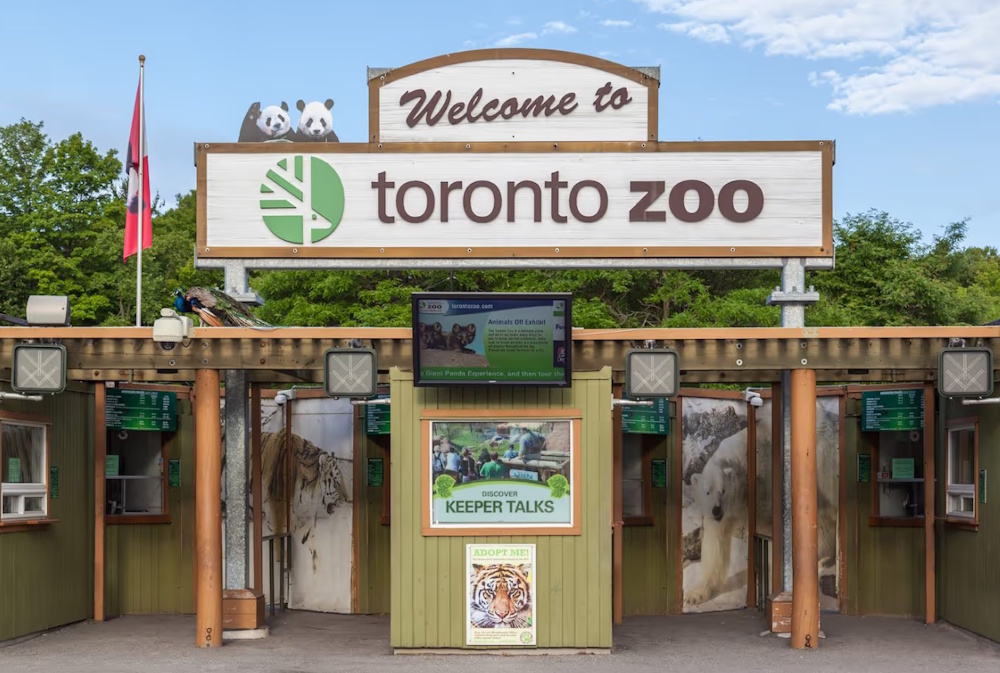
That’s why Toronto ends up reading as Canada’s most recognizable city. The downtown skyline is the symbol, and it’s a strong one, but symbols last when they’re backed by places people actually want to spend time in.
In my humble opinion, that’s the real trick: the CN Tower makes Toronto easy to identify, while the aquarium, the zoo, and the broader visitor experience make it worth staying for.
Why Toronto is known for multicultural neighborhoods
Almost half the city was born somewhere else: 1,286,140 Toronto residents were immigrants in 2021, or 46.6% of the population, according to the City of Toronto Census Backgrounder. That number matters because it changes what the city feels like at street level. You don’t experience Toronto as one neat, uniform place.

You experience it block by block, through shifts in language, storefronts, groceries, places of worship, and the kind of food people argue over as if their reputation depends on it.
Chinatown, Little Italy, and Greektown aren’t decorative labels for tourists. They’re part of how the city organizes memory and identity. A short trip across town can take you from Chinese bakeries and herb shops to Italian cafés and old-school trattorias, then into the Danforth’s Greek restaurants and bakeries.
That’s the version of Toronto people remember: not a single personality, but a stack of distinct local worlds sitting side by side.
What’s often missed is that this mix feels unified and fragmented at the same time. Toronto sells itself as one city, but the real appeal is that it contains many cities at once. That’s exciting, and sometimes messy. Neighborhood pride runs deep, and the differences are the point.
You hear that difference, too. More than 200 languages and dialects are spoken across the city, according to the City of Toronto, which helps explain why everyday errands can feel unusually international.
A pharmacy, a strip mall, a family-run restaurant, a weekend market—ordinary places carry the city’s identity better than any slogan does. That’s why multicultural neighborhoods aren’t a side note here. They are the reputation.
Hollywood North, TIFF, and Toronto’s sports teams
CA$2.2 billion in projected production spending for 2024 is the kind of number that explains why “Hollywood North” stuck, according to the City of Toronto and Olsberg SPI.
Toronto keeps getting chosen for a practical reason as much as a glamorous one: it can pass for a lot of places on screen, crews know how to move fast, and the local talent base is deep enough to support huge productions without importing every key role.
That matters more than any single movie title. The city’s screen sector employed more than 35,000 highly skilled workers in 2022 and was estimated at 40,000 by 2025, which tells you this isn’t just a nickname for tourism brochures. It’s an industry with weight.
September changes the city’s mood. TIFF turns downtown into one of the film world’s busiest stages, where premieres, press lines, and dealmaking all happen within a few blocks. What makes the festival matter isn’t just celebrity spotting.
It’s that Toronto sits in a rare middle ground: big enough to attract major studios and awards contenders, but public-facing enough that regular moviegoers still feel part of it.
I’d argue that’s a huge part of the city’s appeal; you get prestige without the closed-off feeling that can make other festival cities seem remote.
Inside the arenas, though, none of that red-carpet polish matters. Scotiabank Arena and Rogers Centre are where Toronto’s reputation gets louder, rougher, and much more local.
The Raptors, Maple Leafs, and Blue Jays aren’t famous because of long historical lectures; they’re famous because they dominate conversation, schedule, and mood.
A Leafs loss can flatten a night. A Raptors run can pull in people who barely follow basketball the rest of the year. A Blue Jays home game can make the downtown core feel like it’s moving to one rhythm.
That split is part of what makes the city memorable. Toronto gets outsized attention for both film and sports, but those two worlds don’t always overlap. On a red carpet, it feels global and polished. In the stands, it feels tribal, specific, and intensely Toronto.
Business, finance, and the food scene locals defend
Nearly CA$5 trillion in market value runs through Toronto’s main stock exchanges, according to TMX Group’s 2024 figures, and that number tells you why the city gets tagged as Canada’s financial capital so quickly.
This is the country’s biggest city, the place where banks, corporate headquarters, startups, and Bay Street all stack on top of each other. Tech has sharpened that image even more: CBRE reported in 2024 that Toronto added 95,900 tech jobs from 2018 to 2023, a 44% jump that pushed it to No. 4 in North America for tech talent. That’s not small-city ambition. That’s scale.
But the polished version of Toronto is only half true. If you want to feel the city instead of just describing it, you don’t start in an office tower lobby—you start where people line up for peameal bacon sandwiches, fresh pasta, hot coffee, produce, and whatever lunch they swear is the best in town. St. Lawrence Market has that pull.
National Geographic once ranked it among the world’s best food markets, and locals still talk about it less like a tourist stop and more like proof that Toronto has taste.
The contrast matters because Toronto’s reputation can sound colder than the city actually feels. Bay Street says money, efficiency, and ambition. The food scene says obsession, argument, habit.
Michelin’s 2024 Toronto & Region selection recognized 16 starred restaurants, including one two-star spot, and the guide’s regional fact sheet says the recognized list spans 30 cuisine types.
Impressive, yes—but what’s often missed is that Toronto earns its food credibility just as much in modest storefronts, market counters, and late-night kitchens as it does in formal dining rooms. That’s the version locals defend hardest.
Conclusion
What is Toronto best known for? The short answer;
- The CN Tower
- Diverse neighborhoods
- Film
- Sports,
- Finance
- … and food
But… the better answer is how tightly those pieces fit together. A city doesn’t reach nearly CA$5 trillion in exchange value, add 95,900 tech jobs in five years, support a screen industry heading back above CA$2.2 billion, and earn Michelin recognition across 30 cuisines by accident.
Toronto works because its identity isn’t built on one headline attraction. It’s built on constant crossover. That’s what visitors notice late, and what locals defend immediately.
If you want to judge the city properly, don’t ask what single thing it’s known for. Ask why so many different worlds manage to hold together here.
Frequently Asked Questions
What is Toronto best known for?
Toronto is best known for being Canada’s largest city and one of its most multicultural. People also know it for the CN Tower, a serious food scene, major sports teams, and its film industry. That mix matters because Toronto doesn’t have just one identity — it has several, and they all pull in different crowds.
Why is Toronto called Hollywood North?
Toronto earned that nickname because it’s a major filming hub for TV shows and movies. The city also hosts TIFF, which is one of the most important film festivals in the world. That said, it’s not just about star power — the city’s streets, crews, and studios make production practical, not just flashy.
What are the most famous landmarks in Toronto?
The CN Tower is the big one. It stands 553 meters tall and draws attention with its glass floor and 360 Restaurant, but Toronto also gets plenty of visitors for places like Ripley’s Aquarium of Canada. If you want one image that says “Toronto,” though, it’s the CN Tower every time.
Is Toronto a good city for food?
Yes, and it’s one of the best reasons to visit. St. Lawrence Market is a standout, and the city’s neighborhoods — from Chinatown to Little Italy and Greektown — give you real range instead of the usual tourist-safe menu. The surprise is how easy it is to eat extremely well here without trying hard.
What sports teams are Toronto famous for?
Toronto is famous for the Raptors, Maple Leafs, and Blue Jays. You’ll see the action at Scotiabank Arena and Rogers Centre, which are both central to the city’s sports identity. The Leafs bring the old-school hockey energy, but the Raptors have given Toronto a newer, louder global profile.