
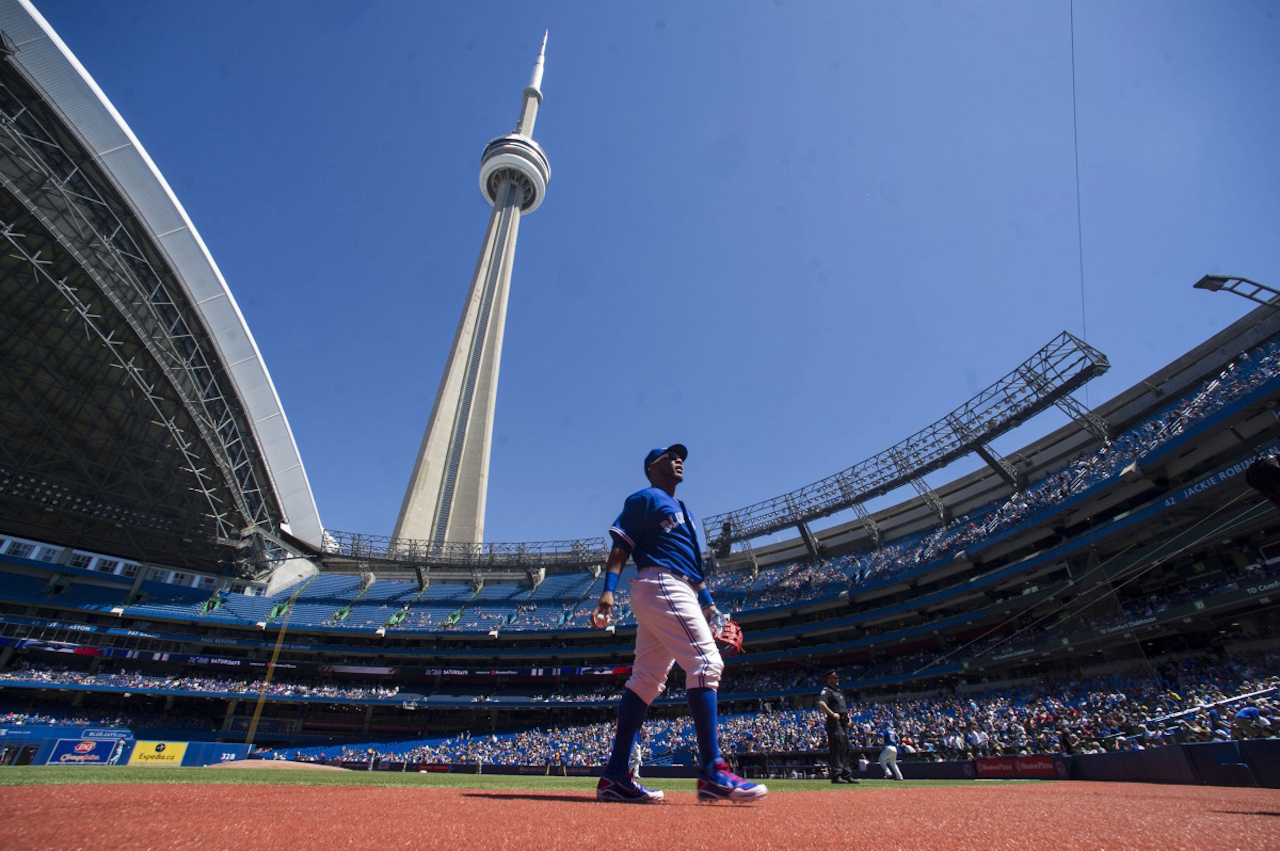
Toronto Blue Jays fans are coming off a 94–68 AL East-winning 2025 season, with the club going 54–27 at Rogers Centre and drawing 2,849,935 fans, the second-highest total in the American League. That matters because this is not just a nostalgia franchise living off 1992 and 1993, when Toronto packed more than 4 million fans into back-to-back championship seasons. The team now sits at the intersection of real spending, strong home demand, and a ballpark that changed after a nearly $400 million renovation.
The practical details matter too: Rogers Centre is a 10-minute walk from Union Station, which makes the subway, GO, and streetcars the smart play over driving downtown. The story starts with a 1976 expansion franchise named through a public contest, but the useful question is what the club means now for fans watching from Toronto.
Team basics, league, and where they fit in MLB
Only one MLB club carries a Canadian market every night, and it has to earn its October chances in the same division as the Yankees, Red Sox, Orioles, and Rays. The Toronto Blue Jays are a Canadian professional baseball team based in Toronto, but their competitive life is shaped less by geography than by the grind of the American League East.
Toronto competes in Major League Baseball as a member of the American League, with the AL East setting the terms of the season. That matters because divisional games are not background noise; they influence playoff positioning, tiebreaker pressure, trade-deadline urgency, and how quickly a good month can be cancelled out by a rough stretch against familiar rivals.
In a softer division, a decent roster can hang around. In this one, decent is usually not enough.
The recent evidence backs up the point. In 2025, Toronto finished 94–68 (.580), won the AL East, scored 798 runs, and went 54–27 at home, according to MLB.com. That record was not just a nice regular season line; it showed the level required to finish ahead in a division where brand-name rivals and well-built rosters keep the pressure on from April through September.
The Canadian identity gives the club a different place in MLB than any other team has. It draws national attention, not just local attention, and that makes big series feel larger than a normal divisional matchup.
Still, the practical read is simple: Toronto can have a distinct national profile, but the standings do not grade on symbolism. The AL East demands wins, depth, and consistency every year.
Championship years and the franchise peak
Toronto has not lifted the World Series trophy since Joe Carter ended the 1993 Series with one of baseball’s most replayed swings. The franchise’s peak is not a vague nostalgia piece; it is a two-title run, with championships in 1992 and 1993, that still supplies the standard against which every serious Toronto season is measured.
The scale of that era was bigger than the trophies alone. According to the club’s MLB.com history, Toronto set a then-MLB attendance record in 1992 with 4,028,318 fans, then drew a franchise-record 4,057,947 in 1993 while winning its second straight championship. That combination matters because it shows the club at full force: winning, selling out the building, and turning baseball into a citywide habit rather than a niche summer option.
Those back-to-back titles remain the benchmark because no later team has matched them. The long gap since 1993 gives the championship years extra weight, but it also makes them a burden. A good season in Toronto is rarely judged only by regular-season competence; it gets compared to the years when the club finished the job.
That is why the early 1990s still dominate the franchise’s reputation. They are the proof that the market can carry a heavyweight baseball team, and the reminder that anything short of another deep October run feels unfinished.
Rogers Centre and the easiest way to get there
The best route to a Jays game usually ends with a walk from Union Station, not a search for a parking spot beside the CN Tower. The club has played its home games primarily at Rogers Centre since 1989, and its downtown address is a real advantage for anyone coming from within Toronto or the wider region.
GO Transit/Metrolinx says Rogers Centre is a 10-minute walk from Union Station, which is the key detail for game-day planning. Union connects GO trains, the TTC subway, the UP Express, and nearby streetcar routes, so the ballpark works as a regional destination without needing a car. For TTC riders, Line 1 to Union is the cleanest option, while the 509 Harbourfront and 510 Spadina streetcars are useful if the trip starts west of the core or along the waterfront.
Driving is the weaker choice because the stadium sits in one of Toronto’s tightest event zones. Bremner Boulevard, Front Street, the Gardiner access points, and the blocks around the arena and convention centre all absorb office traffic, tourist traffic, and game crowds at the same time. Even when the route looks short on a map, the last few blocks can eat time, and the postgame exit is worse because thousands of people are moving toward the same sidewalks, stations, rideshares, and garages.
The tradeoff is simple: downtown access makes the stadium easy to reach, but it also concentrates crowds before first pitch and immediately after the final out. Arriving early reduces the crush at Union and gives enough time to clear security without rushing. After the game, walking a few extra blocks before boarding transit can be calmer than joining the first wave straight back into Union, especially after a high-attendance night or a weekend afternoon game.
Current identity: manager, mascot, and what fans see now
MLB.com reported on March 23, 2026, that John Schneider had signed a two-year extension through 2028, giving the club a clear managerial face rather than a revolving-door feel. For fans, that matters because the modern team is sold less as nostalgia and more as a present-tense product: a manager with continuity, a renovated stadium presentation, and a crowd that expects competitive baseball without needing a history lesson every inning.
Ace is the official mascot, and the club leans on him exactly where mascots work best: family sections, between-innings bits, concourse appearances, and the easy photo-op side of a night at the ballpark. The team’s fan-facing guide lists ACE’s “habitat” as Rogers Centre and gives him a height of 6’0″, which is goofy in the right way. It keeps the brand accessible for kids while the on-field product stays aimed at a city that follows its teams hard and notices when the vibe feels flat.
The current identity has to balance two things at once. Older fans carry the weight of the franchise’s title-era reputation, while newer fans mostly experience the club through packed summer nights, scoreboard production, social clips, giveaways, and the walkable downtown sports circuit around the arena district. Baseball-Reference lists 2025 home attendance at 2,849,935, averaging 35,184 per game, ranked second among American League teams, which shows that this is not a niche draw in Toronto sports culture.
Inside Rogers Centre, that identity comes through as polished but still local: loud walk-up music, heavy use of blue-and-white branding, mascot spots, alumni nods, and a crowd that often arrives by transit already wearing the uniform. The smart move is treating it like a downtown Toronto event, not a suburban parking-lot outing.
The club’s modern face is younger than its most famous reputation, so the in-stadium experience has to sell both memory and immediacy. Right now, that is the job Schneider, Ace, and the Rogers Centre presentation share.
Why the ballpark and Union Station now shape the fan experience
The next phase of Blue Jays fandom will be shaped as much by access and expectations as by the roster. A winning team with nearly 2.85 million fans through the gates turns casual weeknight games into planned downtown events, especially when the ballpark sits beside Union Station rather than a parking lot.
The renovated Rogers Centre also makes the stadium part of the baseball argument: sightlines, lower-bowl changes, reduced foul territory, and new dimensions all affect how the place feels and plays. For fans, the cleanest move is still the least glamorous one: take transit, arrive early for division games, and treat the walk from Union as part of the experience rather than a problem to solve.
Frequently Asked Questions
Q: Where do the Toronto Blue Jays play their home games in Toronto?
A: The team has played primarily at Rogers Centre in downtown Toronto since 1989. That location matters for planning because it is easy to reach by TTC, especially via Union Station and the downtown subway and streetcar network. For fans coming from outside the core, transit is usually the cleaner option than driving.
Q: What league and division are the Blue Jays in?
A: The Blue Jays compete in Major League Baseball as a member of the American League East Division. That places them against division rivals such as the Yankees, Red Sox, Rays, and Orioles, which shapes a large part of the regular-season schedule. Division games tend to matter more because they directly affect standings and playoff positioning.
Q: How many World Series titles have the Blue Jays won?
A: Toronto has won the World Series twice, in 1992 and 1993. Those titles remain the high point of the franchise and are central to how the team is viewed in Canadian baseball history. They also explain why the fan base still expects a serious postseason run, not just a competitive regular season.
Q: Who manages the Blue Jays now?
A: The Blue Jays are managed by John Schneider. In baseball, the manager shapes lineup decisions, bullpen usage, and in-game strategy, so his choices affect how the team performs over a long season. For fans following games closely, that role matters as much as the roster itself.
Q: Who is the Blue Jays mascot?
A: The team’s mascot is Ace. Mascots are mainly part of the in-game atmosphere, especially for families and younger fans at Rogers Centre. They do not affect on-field results, but they are part of the club’s public identity.