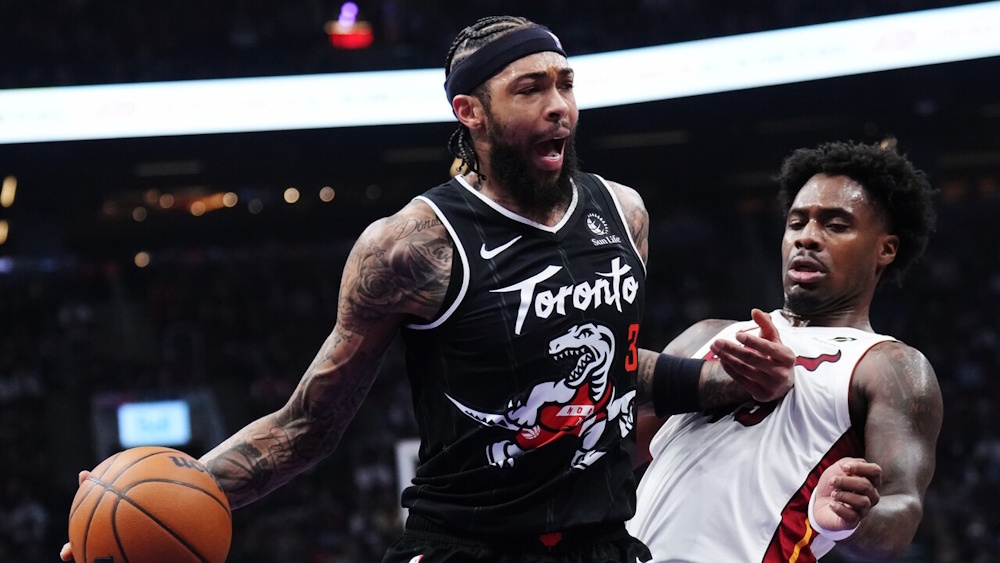
The Toronto Raptors sold an idea that once looked risky at best: a Canadian NBA team backed by a then-record US$125 million expansion fee, nearly derailed by sports-betting rules before it ever played a game.
That’s not a soft launch. It’s a clue to what this franchise has always been — bigger, messier, and more important than a standard expansion story.
Today, the Raptors play at Scotiabank Arena, a 19,800-seat building that stayed at full capacity even during major renovations, and the team still pulled in 19,515 fans per home game in 2023-24 despite a losing season.
That contrast matters. Wins come and go, but interest hasn’t disappeared. What makes the Toronto Raptors worth understanding isn’t just where they play or when they joined the NBA.
It’s how one team came to represent a country, peaked with a title that stopped Canada in 2019, and still carries weight long after the parade ended.
What the Toronto Raptors are and where they play
One NBA team carries a country on its shoulders every night, and that team is based in downtown Toronto. The Raptors are a Canadian professional basketball club from Toronto, Ontario, competing in the National Basketball Association as part of the Atlantic Division in the Eastern Conference.
That basic description is simple enough. What makes it different is the flag attached to it: they’re the league’s only franchise outside the United States.
Scotiabank Arena is where they play their home games, and it isn’t a small-market stop pretending to be big time. The building lists a basketball capacity of 19,800 and stayed fully operational through Phase 2 renovations running from summer 2024 to spring 2025, according to Scotiabank Arena and MLSE.
In May 2024, MLSE also said the arena had hosted more than 80 million fans across 5,000-plus events since opening, which tells you something important about the scale of the place the team calls home.
That Canadian identity shapes everything. Most NBA teams speak mainly to one city or region, but Toronto’s club has long had a wider pull because fans across Canada see it as their entry point into the league. That’s a real advantage, but it also creates pressure.
A Tuesday night home game in Ontario can feel like more than a local event because the team isn’t just representing Toronto; it’s representing Canadian basketball on the NBA map.
I think that’s the clearest way to understand the franchise at a glance: an NBA team, rooted in Toronto, playing in a major downtown arena, but carrying a national profile that no U.S.-based club can really match.
How the Raptors entered the NBA
The price tag alone said this wasn’t a small experiment: Toronto’s ownership group paid a then-record US$125 million expansion fee when the NBA awarded the franchise on November 4, 1993, according to contemporaneous league coverage and the Washington Post.
That fee bought entry for the 1995-96 season, but money didn’t make the path smooth. The bid nearly came apart over provincial sports betting rules, and the fix required the new team to contribute $5 million over its first three years plus $1 million a year after that to offset lost Ontario lottery revenue.
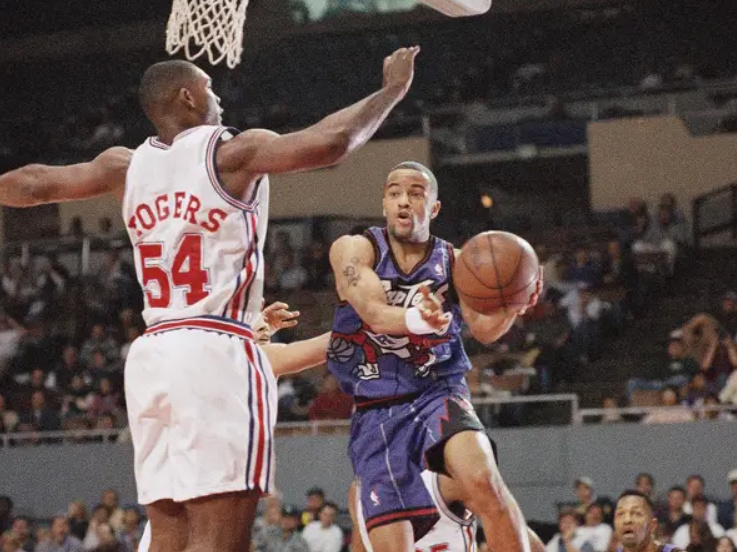
That’s a strange way to begin a basketball franchise, and it matters because the club didn’t arrive as a gimmick dropped into the league overnight; it had to fight its way in before it played a game.
Nothing about the branding looked subtle. The name came out of the 1990s dinosaur craze, with Jurassic Park still huge after the 1993 film turned raptors into pop-culture stars.
Purists rolled their eyes then, and honestly, you can see why: a purple expansion team named after movie-monster dinosaurs sounded more like a marketing brainstorm than a serious basketball institution.
But that’s exactly what makes the story better. The team entered the league carrying all the baggage of a novelty act, which meant it had to earn credibility the hard way.
Expansion teams rarely get the luxury of instant stability, and Toronto didn’t either. The early years were about building from scraps: trying to establish a front office, create a fan base, draft well enough to matter, and convince players that this was a place worth committing to.
There were flashes, setbacks, and plenty of evidence that starting from zero in the NBA is harsher than people think. What’s often missed is that those awkward first steps shaped the franchise’s identity.
Later success felt harder-earned because it was; the team wasn’t born with stature, it built it piece by piece from an expansion slot that many people dismissed.
The 2019 title and why it changed everything
One title changed the Raptors from a respected franchise into a permanent reference point: in 2019, they won their first NBA championship.
That isn’t just the high-water mark of the team’s history; it’s the moment that settled every old question about whether basketball in Toronto could produce the sport’s biggest prize.
Kawhi Leonard sits at the center of that run because he was the star who made the whole thing feel inevitable when the pressure got brutal.
He was named Finals MVP after Toronto beat the Golden State Warriors, and that award captured more than scoring or shot-making. He gave the team a kind of cold certainty that great playoff teams need.
My view is simple: plenty of good Raptors teams had existed before 2019, but that group had a different edge, and Leonard was the clearest reason why.
The scale of the moment went far beyond the standings. Game 6 of the Finals averaged 7.9 million Canadian viewers, and more than 16 million people in Canada watched at least part of the broadcast on June 13, 2019, according to Bell Media and Numeris.
In a country of roughly 37 million at the time, that means the clincher wasn’t just a sports event. It was a national occasion.
But a championship doesn’t only give a team glory; it rewrites the standard. The 2019 run validated the franchise forever, yet it also made everything that followed harder to judge kindly.
Before that season, consistent playoff relevance felt meaningful. After a banner, anything short of another deep postseason push looks smaller than it used to.
That’s the tradeoff of winning at the highest level: you earn lasting respect, and you lose the luxury of modest expectations.
Why the Raptors still matter to Canadian fans
A bad Raptors season still becomes a conversation in Vancouver bars, Montreal sports radio, and Calgary group chats, and that says more about the team’s place in Canada than any win total does.
Toronto may wear the name of one city, but the emotional footprint is national. That’s the real point. When one club becomes the default NBA entry point for millions of people across a country, it stops being just another team and starts acting like shared sports infrastructure.
You can see that reach in what happened after basketball stopped feeling like a niche import. Interest didn’t stay locked in southern Ontario; it spread into cities with their own basketball communities and ambitions.
Vancouver never lost its appetite for the sport even after losing the Grizzlies, Montreal has become a serious stage for international and exhibition basketball, and Calgary’s grassroots scene has grown with more kids treating the NBA as part of their regular sports diet, not a distant American product.
The Raptors didn’t create basketball in those places, but they made following the league feel local enough to matter.
“We The North” did even more than sell merch. It gave the team a language that felt blunt, slightly defiant, and unmistakably Canadian without sounding polite or watered down.
That slogan worked because it wasn’t trying to copy American sports branding; it leaned into climate, distance, outsider energy, and the idea that fans from Halifax to Edmonton could see themselves in it.
I think that’s why it lasted. Most campaigns expire. This one became identity.
The numbers back up the cultural weight, even when results dip. Toronto still averaged 19,515 home fans in 2023-24, according to ESPN, and Forbes valued the franchise at about $4.4 billion in 2025.
But there’s a catch: broad national attachment is a strength that also turns every slump into a national letdown. When the team struggles, it doesn’t disappear into one local market’s misery. The whole country notices.
Conclusion
The Toronto Raptors matter because they’ve outgrown the usual definition of a basketball team.
Their history starts with a costly, politically complicated NBA entry, their home is one of the league’s busiest arenas, and their 2019 championship proved the franchise could command the attention of an entire country — 16 million Canadians watched at least part of that clincher for a reason.
But the bigger point is this: the Raptors didn’t need to stay on top of the standings to stay central to Canadian sports.
A franchise valued at $4.4 billion and still drawing more than 19,500 fans a night in a rebuilding year isn’t living on nostalgia. If you want to understand basketball in Canada, you don’t start anywhere else.
Frequently Asked Questions
When were the Toronto Raptors founded?
The Toronto Raptors were founded in 1995, which makes them one of the NBA’s newer franchises. That matters because they’ve built their identity fast, not over generations, and that gives the team a very different feel from older league powers.
What city do the Toronto Raptors play in?
They play in Toronto, Canada. That’s the whole point of the franchise: they’re the NBA’s Canadian team, and that gives them a national pull that most clubs don’t have.
Which conference and division are the Toronto Raptors in?
The Raptors compete in the NBA’s Eastern Conference as part of the Atlantic Division. That setup puts them against familiar East Coast rivals, but the cross-border identity still makes them stand out.
Why are the Toronto Raptors important to Canadian basketball?
They’re the clearest symbol of NBA basketball in Canada, and that influence goes way beyond one city. The Raptors helped make the sport feel local for Canadian fans, which is a much bigger deal than a standard team brand.
What makes the Toronto Raptors’ identity different from other NBA teams?
Their identity is built on being both Toronto’s team and Canada’s team, and that’s a rare mix. The tension is obvious: they have to feel rooted in one city while representing an entire country, and that pressure is part of what makes them memorable.