
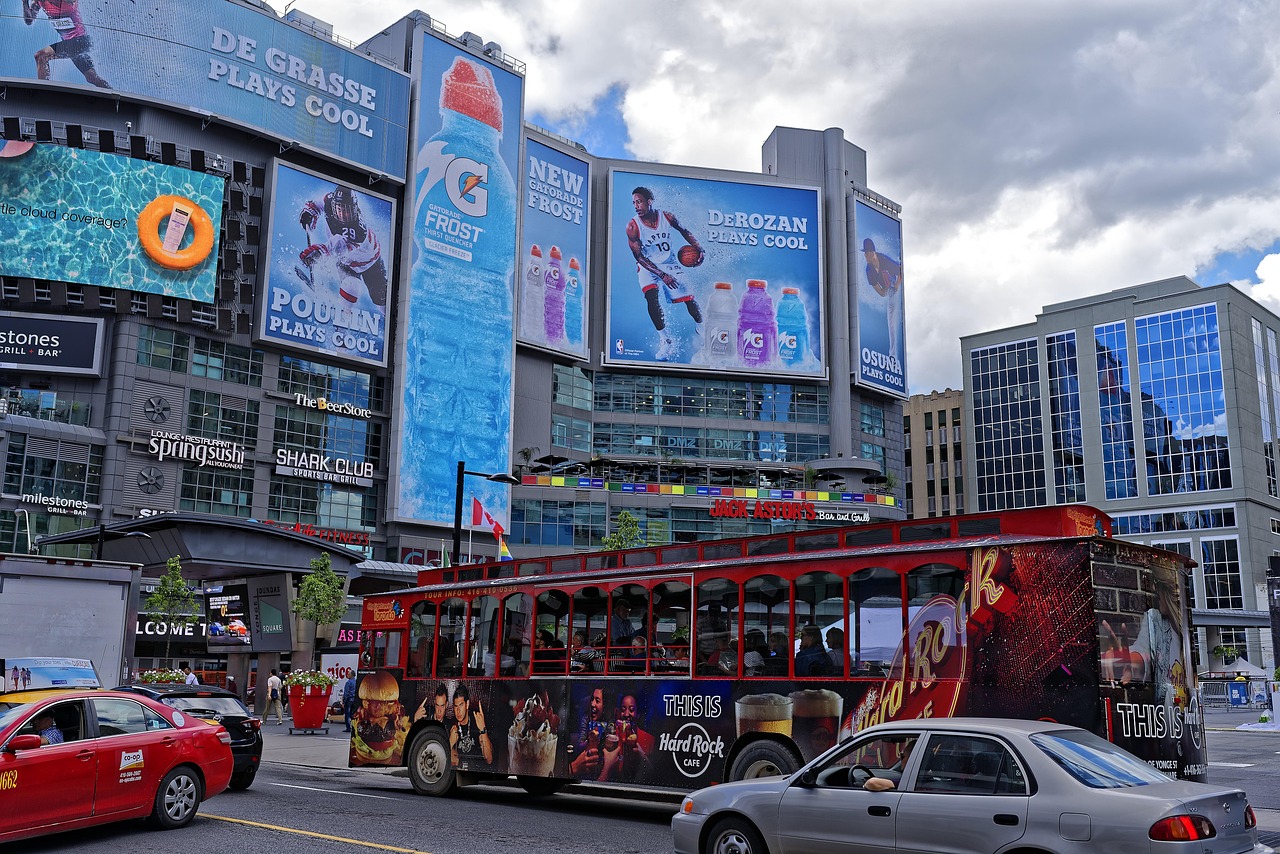
Sankofa Square pulls in 38,333,392 pedestrians a year. The thing most visitors miss is that this one-acre corner is run less like a plaza and more like a civic machine.
The location does the heavy lifting. Yonge and Dundas sits on top of Dundas Station, steps from the Eaton Centre, TMU. The streetcar grid.
Driving here is the rookie move. Take the subway, walk in, and give yourself an exit plan before the screens and crowds swallow your schedule.
The name change also wasn’t a casual rebrand. Council approved the shift from Yonge-Dundas Square on December 14, 2023, after two years of review tied to Henry Dundas and how Toronto names public space. In my honest opinion, that’s the part that makes this corner worth understanding, not just photographing. This guide cuts through the noise: why the corner matters, what happens there on a normal day, and how to visit without wasting half your afternoon.
Where it sits and why that corner matters
Sankofa Square looks like one more loud downtown corner. It pulls more than 38 million pedestrians a year, according to Sankofa Square’s 2025 figures.
That’s not casual foot traffic. That’s a constant push of shoppers, commuters, students, office workers, concert crowds, and people cutting across downtown because this corner sits exactly where they already need to be.
The square is at the southeast corner of Yonge Street and Dundas Street East, in the Garden District. If you’re coming by subway, use Dundas station and follow the north-side exits toward the square. TTC data from 2023–2024 counted 72,406 typical weekday customer uses at the station, so don’t expect a quiet arrival.
This is the part visitors misread. The spot looks like a simple intersection. It works more like a transit magnet… and that means easy access, heavy crowds, and very little calm. In my view, this is one of the few Toronto landmarks where driving makes the visit worse, not better.
Streetcars and subway connections do the work here. From Queen station, walk north on Yonge for about 8 minutes.
From College station, walk south for roughly the same. If you’re coming from the Eaton Centre, use the Dundas end and you’ll spill out almost directly beside the square without needing to cross half of downtown.
The site opened under its former Yonge-Dundas Square identity in 1983, before the later name change shifted how the city talks about it. Don’t get hung up on the name when planning your route. Get the corner right, pick the TTC stop that fits your direction, and assume the sidewalks will be busy unless you arrive early.
Why the square changed names
The old name came from Henry Dundas. That was the problem Toronto could no longer skate around. The key civic handoff came in 2024, when Toronto City Council approved the name change and moved the square away from Yonge-Dundas Square, the label most locals still say without thinking.
Sankofa carries a sharper message. The word comes from an Akan concept about returning to the past to retrieve what was lost, then carrying that lesson forward. In my honest opinion, that makes it a better civic name than one tied to a politician whose record sits badly beside the city Toronto claims to be.
This wasn’t just a sign swap: according to the City of Toronto, the square is a one-acre outdoor public space run by a City agency, with a 15-member Board of Management that includes the Ward 13 councillor, 10 public appointees, and non-voting City and agency staff. In plain English, the name sits on a real civic asset. It isn’t just branding on a plaza.
Still, the old name has street-level muscle. Ask a cab driver, a security guard, or someone half-watching for their streetcar, and there’s a good chance they’ll use the former name first.
That’s not resistance every time. Habit is powerful, especially in a city where directions often run on shortcuts and old landmarks.
The cost also gave the rename a sharper edge. City estimates put the net cost at $700,000, which made the change easy to attack if you only see the square as a meeting point under big screens.
But names tell people who gets remembered in public. That matters here, even if your map app takes a while to catch up.
What actually happens there day to day
On a programmed day, this place can feel less like a square and more like a pop-up arena dropped into the middle of downtown. The open paved area covers 12,000 square metres.
It can absorb crowds that would overwhelm a normal plaza. That scale is the whole point.
Most normal days run on movement, not lingering. Office workers cut across it.
Shoppers drift in from the eaton centre. Tourists stop for photos, look up at the screens, then decide whether there’s enough going on to stick around.
The square is built for concerts, brand activations, and public gatherings, not for hiding from the city. Toronto’s 2026 Budget Notes report 171 activated or event days in 2024, with a target of 150 in 2026. That tells you how the place really works: it earns its keep by being programmed.
Here’s the tradeoff. When something is on, the payoff is obvious. You get free music, big crowds, product launches, civic events.
The odd downtown spectacle that feels very Toronto in a good way. But when nothing is booked, the hard surfaces and constant noise can make it feel exposed.
In my humble opinion, the square is worth your time when it has a reason to be loud. If you want a calm bench, shade.
A proper reset, go somewhere else. This is not that kind of public space.
Event days also change the rhythm fast. The same budget notes say sampled events draw about 10,000 to 30,000 unique attendees per day, with weekends running heavier. If you’re passing through, give yourself extra time and don’t expect a straight-line walk across the plaza.
For a casual visit, check the event calendar before you go. If there’s programming, stop and take it in. If there isn’t, treat it as a quick downtown marker rather than a destination.
Best way to visit without wasting time
The fastest visit is usually ten minutes long: arrive, look up, cut through the mall, and leave before the sidewalk jam catches you.
If you’re already downtown, use streetcar access on Yonge and make the square a quick add-on, not a separate mission. The TTC gets you close in minutes, but that’s exactly the problem. The same easy access that saves you time also dumps everyone else into the same few sidewalks at lunch, after work, and before big events.
Go mid-morning on a weekday if you want the least hassle. Early evening can work too, but only if there isn’t a concert, screening, protest, or promo setup taking over the space.
If you see barricades or a stage being built, don’t force it. Circle the edge, get your bearings, and move on.
Use Queen station as your cleaner approach from the south. It lets you come up through the shopping complex or along Yonge without landing right in the thickest crush. That small detour pays off when the north-side sidewalks feel pinned down by crowds, food delivery bikes, and people stopping dead for photos.
The easiest pairing is the Eaton Centre and downtown Yonge. Keep it tight: square, mall, Yonge storefronts, done. You don’t need to build a whole afternoon around this corner. In my view, the smart move is to treat it like a high-energy checkpoint, not a place to linger and pretend it’s relaxing.
Watch your pace once you’re there. People cut across from every direction. The curb edges get messy fast.
If you’re meeting someone, pick a spot inside the mall or outside a specific entrance instead of saying “meet at the square.” That sounds simple until you’re both standing twenty metres apart, blocked by a promo tent and a wall of commuters.
How to make this stop pay off without losing an hour
Treat the square as a timed stop, not a destination you drift into. Check the event calendar first, then ride the TTC to Dundas and move on foot from there. If a stage is up, assume the crowd will set your pace.
By 2027, the City wants 200 activated days here. That means more free programming, more sponsor setups, and fewer quiet moments.
The subway already handles 72,406 typical weekday uses at Dundas Station. The better plan is simple: arrive early, stay flexible, and leave by streetcar or on foot if the platforms feel packed. In my humble opinion, the square rewards people who treat downtown like a network, not a parking problem.
Frequently Asked Questions
Q: Where is Sankofa Square in Toronto?
A: It sits at the southeast corner of Yonge Street and Dundas Street East in the Garden District, right in downtown Toronto. That location makes it easy to reach on the TTC. You don’t need a car for this one. In my view, Walking up from Dundas Station is the smartest way to arrive.
Q: Is Sankofa Square easy to get to by TTC?
A: Yes. Dundas Station is the most practical stop. The surrounding streetcar and subway connections make the square simple to reach from most of downtown. Driving is the awkward choice here. Transit gets you there faster and with less stress.
Q: What is Sankofa Square used for?
A: It’s a public square and outdoor venue, so expect open space, events. A steady flow of people rather than a quiet sit-down spot. That mix is the point. It also means the vibe changes fast depending on what’s happening that day.
Q: Can you walk from Sankofa Square to other downtown areas?
A: Yes, and that’s where it makes sense to be strategic. You can walk to the Eaton Centre, Yonge-Dundas, or keep moving south into the Garden District without needing a car. The area pays off most when you connect a few stops on foot instead of treating it like one isolated attraction.
Q: Is Sankofa Square worth visiting?
A: Yes, especially if you’re already downtown and want a central spot that plugs into the city instead of sitting apart from it. 2024 brought a new chapter for the square, with Oluwaseun “Seun” Adegoke tied to its naming. The location at one of Toronto’s busiest intersections makes it more about access and energy than sightseeing in the usual sense. In my honest opinion, that’s exactly why it matters.