
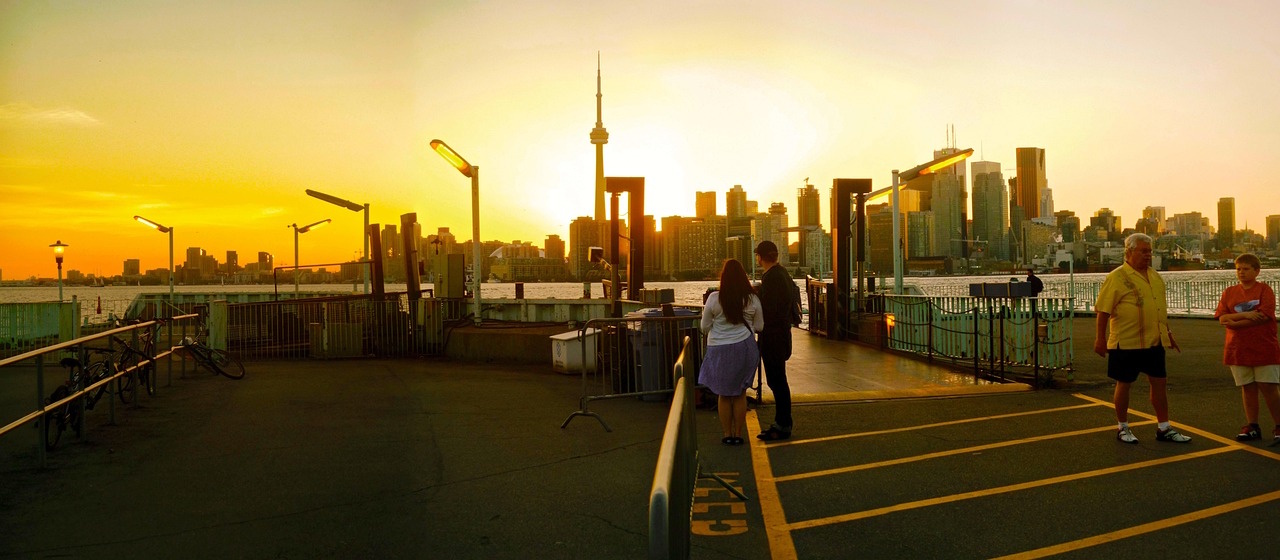
Toronto pulled in $8.8 billion in visitor spending in 2024 despite hosting 600,000 fewer overnight visitors than 2019. That gap tells you something useful: people are spending hard here, but they’re still wasting time in the same predictable places.
The downtown core carries more than postcard weight. The tourism agency tracks 9 million overnight visitors. The city counts 664,650 downtown jobs.
The centre isn’t a cute add-on. It’s the machine. But that doesn’t mean you should camp at Yonge-Dundas Square or book every big-ticket attraction.
In my honest opinion, the smart trip is built around transit, short walks, and knowing when to leave the core. The UP Express gets you from Pearson to Union Station in 28 minutes.
A 10 km drive can eat nearly the same time before you’ve even found parking. This guide cuts through the obvious picks and points you toward the neighbourhoods, routes, and skips that actually pay off.
Why the downtown core pulls the most weight
The most photographed blocks downtown are not the blocks that make the trip work. Start with Union Station, then treat King Street and St. Lawrence Market as your first three anchor points. That triangle gives you trains, subway access, streetcars, food, old brick, office towers, and easy walking distance without wasting half a day crossing town.
Line 1 runs through Union. You can land there and move north or south without thinking too hard. The King streetcar also does real work for visitors.
It links the theatre district, restaurants, hotels, and east-west movement better than a cab ever will at peak times. Walk from Union to King in minutes, then keep going east toward St. Lawrence Market if you want a better payoff than another glass-tower photo.
Downtown has real weight, not just postcard value. The City of Toronto’s 2025 Employment Survey counted 664,650 jobs downtown, which explains the crowds, the lunch rush. The polished lobbies.
But that same polish fades fast after office hours. The Financial District can feel oddly empty once the suits clear out.
That’s why I wouldn’t spend your whole day inside the office core. In my view, the smarter move is to use it as a launch pad, not the main event. St. Lawrence Market stays useful because it gives you food, texture.
A reason to slow down. King Street stays useful because it keeps moving after dark.
If you’re arriving by train or airport rail, don’t overcomplicate it. Come into Union, orient yourself, and walk before you ride again.
The best downtown route is often a short subway hop plus ten good minutes on foot. Driving through this part of the city is how visitors turn a simple plan into a mood problem.
Which neighborhoods are worth your time
The prettiest stop can be the weakest use of your afternoon if you treat it like a full neighbourhood crawl.
Kensington Market earns the longest stay. Get off at St. Patrick Station, walk west along Dundas, then let the side streets do the work.
This is the pick for food, vintage racks, murals, and people-watching. It’s messy in the right way. In my honest opinion, this is where visitors get the most actual city for the least planning.
Queen West is better when you want shopping with a side of wandering. Use Osgoode Station for the cleaner east end, or Queen Station if you’re pairing it with the Eaton Centre area. The farther west you walk, the more the chain-store feel gives way to galleries, indie shops, and better window-shopping.
But don’t force yourself to spend. Queen West is often more rewarding as a slow walk than as a buying mission.
The Distillery District is the photo stop. Take the 504 streetcar along King and get off near Parliament, or use Distillery Loop if your car goes that far. The brick lanes look great, especially near golden hour.
Still, this is the tradeoff: it’s polished, compact, and pricier than it needs to be. Go for 45 minutes, take the pictures, grab a coffee if you want, then move on.
Visitor demand explains why these areas can feel crowded even outside peak summer. In 2024, Destination Toronto reported 9 million overnight visitors spent $8.8 billion, a record total even with overnight visits still 600,000 below 2019.
That money doesn’t spread evenly. It pools in the obvious zones.
Pick based on your tolerance. Kensington rewards curiosity. Queen West rewards walkers.
The Distillery rewards cameras. If you only have time for one, choose substance over polish.
How to get around without wasting a day
A 10-kilometre drive across the city averaged 26 minutes 40 seconds in TomTom’s 2025 traffic data, which is grim once you remember that 10 kilometres barely gets you across a normal visitor itinerary. The fastest-looking option on a map is usually the slowest in practice… especially once you factor in traffic, parking fees. The time lost circling for a spot. In my humble opinion, renting a car for central sightseeing is the easiest way to make the city feel worse than it is.
Line 1 is your north-south spine. Use it for downtown hops, midtown runs, and fast access to stations like St. Andrew when you want the theatre district or the Financial District edge without surface traffic. Union still matters for arrivals, but don’t treat it as the answer to every downtown movement.
For east-west travel, Line 2 does the heavy lifting. Bloor-Yonge is the big Line 1 and Line 2 transfer point. It can feel punishing at rush hour. If you’re heading west, Spadina can be useful, especially when you want the 510 streetcar south toward Chinatown, the waterfront, or connections around the university stretch.
Streetcars are slower than the subway. They beat walking when your route is long and straight. The 501 Queen streetcar is useful for crossing the lower west side without committing to a huge walk.
The 512 St. Clair streetcar helps in midtown when Line 1 gets you north but not quite close enough. Short hops are where streetcars shine. Long crosstown rides can drag.
Walking wins when two places are within 15 or 20 minutes and the weather isn’t punishing. You’ll see more, spend less time underground, and avoid waiting for a vehicle that may arrive packed.
But don’t romanticize it. A “quick” walk from the waterfront to Bloor can chew up your afternoon and your legs.
The TTC still moves the city at scale. Its Annual Report says 2024 saw more than 423 million customer trips, including Wheel-Trans, so you’re not using some fringe option.
Build your day around subway jumps, streetcar connectors, and strategic walks. Leave the car out of it unless you’re leaving the core entirely.
What locals skip and first-timers keep booking anyway
The easiest $100 to spend near the water is also the easiest $100 to regret. The CN Tower earns its fee on a clear weekday morning, when visibility is sharp and the elevator line hasn’t turned into a slow-moving family reunion. Book it for sunset on a Saturday and you’re paying premium money to stand in a crowd with everyone else who had the same idea.
Ripley’s Aquarium of Canada is the trickier call. It’s polished, central, and useful with kids or bad weather.
It can feel like an expensive indoor shuffle when school groups, cruise passengers, and weekend crowds land at once. CityPASS added it in 2025 and marketed savings of up to 38% on five major attractions, which explains why first-timers keep stacking the same circuit.
That pass can make sense if you truly want several paid stops. Don’t buy it just because the math looks tidy. In my view, the better move is to skip one packaged attraction and spend that time eating or walking somewhere that still feels lived-in.
The central waterfront gets oversold too, but not because it’s bad. The problem is timing.
Go early on a weekday, walk the Harbourfront stretch, grab coffee, watch the ferries move, and leave before the afternoon crush hits. Show up during a warm weekend rush and it turns into a slow parade of strollers, bikes, tour groups, and people stopping dead for photos.
Bad weather changes the play. Instead of forcing the lakefront in sideways rain, use the PATH for a dry downtown wander, then surface when the weather lets up. It isn’t charming in the postcard sense, but it’s useful, and useful matters when your shoes are soaked.
For transit, aim for the 509 Harbourfront streetcar if you’re staying close to the lake. Don’t drive down there unless you enjoy paying to move slowly.
If the big-ticket plan starts feeling crowded or overpriced, cut one stop and put the time into a nearby food run or a street-level walk away from the attraction zone. That trade is usually where the day gets better.
Why your first stop should be a station
Build your first day around the rail line, not the hotel lobby. In 2025, the CityPASS pitch got stronger with Ripley’s in the bundle. A discount can still lock you into a day that feels planned by a spreadsheet.
Start with one anchor stop instead. TTC carried 423 million customer trips in the last reported year. The system still shapes the city even below 2019 ridership.
Pick Union, Spadina, Dundas West, or Broadview. Then walk outward.
In my humble opinion, the best visit leaves room for a streetcar detour and one neighbourhood you didn’t pre-book. If your plan needs a car, a tight schedule, and perfect traffic, it’s not a plan. It’s a dare.
Frequently Asked Questions
Q: What are the best neighborhoods to visit in Toronto without a car?
A: Start with the downtown core, Kensington Market, the Distillery District. The Annex. They’re easy to link by subway, streetcar, and walking. You won’t waste time sitting in traffic. In my view, that’s the smartest way to see Toronto, not by trying to cram everything into a cab.
Q: Is it better to use the TTC or drive around Toronto?
A: Use the TTC. Driving sounds convenient until you hit parking fees, one-way streets, and slow traffic that eats your day. Subway plus streetcar gets you closer to the places that matter. You can actually enjoy the walk between stops.
Q: What should I skip if I only have one day in Toronto?
A: Skip far-flung attractions that take a long transfer for a small payoff. If a place needs multiple transit changes and doesn’t offer a clear reward, it’s not worth your limited time. Focus on areas with dense streets, good food, and easy connections instead.
Q: How do I get from Union Station to the main sights?
A: Union is the easiest starting point in the city. From there, you can walk to the waterfront, hop the TTC to the St. Lawrence area, or connect quickly to the subway for farther neighborhoods. That’s the advantage… everything fans out from one place.
Q: What’s the best way to avoid crowds in Toronto?
A: Go early and use transit before the rush builds. Midday gets packed around major attractions, but neighborhoods like Queen West or the Distillery District are much easier if you show up right when shops open. In my honest opinion, the first hour of the day is the sweet spot.